

How to Ship a Car From a Dealership: A Step-by-Step Guide

Buying the right car does not always mean buying the car down the street.
More customers are shopping nationwide, buying vehicles from dealerships hundreds or even thousands of miles away, and having them shipped home. It opens up a much larger inventory and can sometimes save enough money that shipping the vehicle still leaves you ahead.
But buying the car is only half the process.
The dealership can have your new vehicle cleaned, fueled, and sitting out front looking beautiful, but that does not mean a carrier can simply show up and take it. Payment needs to be complete, the vehicle has to be released, someone at the dealership needs to have the keys, and the transporter needs to know exactly where and when the vehicle can be loaded.
At Vice Auto Transport, we coordinate dealership pickups across the country every day. One of the biggest things our customers appreciate is having an actual person they can call or text when something changes.
Our agents are friendly, communicative, and accessible throughout the process. Instead of leaving you trying to coordinate a dealership and truck driver yourself, we help keep everyone on the same page from pickup through delivery.
Here is how to make the process as easy as possible.
Start With the Dealership Before Scheduling Transport
Before worrying about the truck, make sure the dealership is actually ready to release the vehicle.
That sounds obvious, but it causes more problems than you might think.
A carrier cannot resolve an unpaid balance, missing signature, financing issue, title problem, or dealership release hold while sitting outside with a 70-foot trailer.
Ask the dealership to confirm that the vehicle is completely ready for transport and get:
The exact pickup address Dealership hours A direct contact and phone number The VIN Any special vehicle-release instructions Confirmation that the vehicle is ready to leave
The salesperson who sold you the car may not necessarily be the person handing the transporter the keys. Some dealerships use a shipping department, inventory manager, porter, or separate delivery lot.
This is where good communication matters.
When Vice Auto Transport assigns a carrier, our team can coordinate the transportation details with you and the dealership so everyone knows what is happening. If something changes, you have an actual person to call or text rather than wondering where the truck is.
Tell Us Exactly What We Are Picking Up
A normal running vehicle is straightforward.
But if there is anything unusual about the car, tell us before we assign the carrier.
That includes:
Mechanical problems Very low ground clearance Oversized tires Lift kits Aftermarket bodywork Vehicles that do not run, steer, or brake normally
These details affect which transporter can safely move the vehicle.
The same applies to EVs and large SUVs or trucks. Vehicle dimensions and weight matter because carriers have both physical space and legal weight limits.
Nobody wants the transporter arriving at the dealership only to discover that the vehicle cannot safely be loaded onto the equipment we sent.
Open or Enclosed Transport From a Dealership?
For most dealership purchases, open auto transport is perfectly fine.
These are the same general types of multi-car trailers you see transporting dealership inventory around the country every day. Open transport is widely available and usually the most economical way to ship a standard car, truck, SUV, or EV.
But sometimes the vehicle deserves something more.
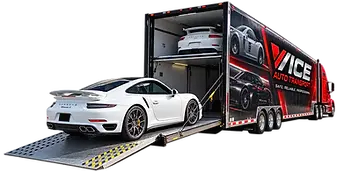
If you just bought a luxury or exotic vehicle like a Lamborghini, Ferrari, Porsche, restored classic, collector vehicle, or simply a new car that you absolutely do not want exposed to weather and road debris, enclosed transportation may be worth the additional cost.
We explain the differences in more detail here:
Not All Enclosed Auto Transport Is the Same: Understanding Enclosed Trailer Types
Enclosed trailers also come in different configurations. A smaller two-car enclosed transporter can provide a very different service than a larger multi-vehicle enclosed trailer.
If you're considering enclosed shipping, we explain what to look for, including trailer type, loading equipment, vehicle clearance and carrier suitability in our guide:
You do not need to own a six-figure exotic to choose enclosed transportation. Sometimes a customer just bought the car they've wanted for years and wants it arriving as clean and protected as possible.
That's a perfectly legitimate reason.
Make Sure the Transporter Can Actually Reach the Dealership
"Door-to-door shipping" does not mean a 75-foot truck is going to squeeze underneath a parking garage because Google Maps says the dealership is inside. 😅
Large auto transporters need room.
Dealerships located on narrow streets, downtown blocks, crowded service drives, or underneath low trees and power lines can sometimes be difficult or impossible for a full-size transporter to access safely.
Usually this is easy to solve.
The driver and dealership can arrange a nearby wide street, shopping center, large parking lot, or another safe meeting point.
If your driver asks to meet somewhere nearby, that does not necessarily mean you're receiving worse service. Sometimes it means the driver is smart enough not to drag the top of somebody's new SUV through a tree branch.
Get the Keys and Release Paperwork Ready
Before pickup, ask the dealership what it requires to release the vehicle to a third-party transporter.
Some dealerships simply need the carrier's name.
Others may require:
A signed authorization A copy of your ID Proof of completed payment Carrier information Written permission to release the vehicle
The carrier will also need at least one working key or key fob.
Whenever possible, keep your spare.
If the dealership is still installing accessories, completing paint correction, handling a recall, repairing something, or waiting for final paperwork, tell your Vice Auto Transport agent.
We would rather work with the realistic ready date than send a truck after a vehicle that cannot leave yet.
Document Your New Vehicle Before It Leaves
This is especially important when you purchased the vehicle remotely and cannot inspect it yourself.
Ask the dealership to take clear photos before pickup.
We recommend getting pictures of:
Front and rear Both sides Wheels Windshield Roof Interior Odometer Existing scratches, dents, or damage
The carrier should also complete a vehicle condition report or Bill of Lading (BOL) at pickup.
That paperwork matters.
At delivery, inspect the vehicle before signing the final Bill of Lading whenever possible.
If you notice new damage, document it on the delivery paperwork and take photographs before the driver leaves.
Do not depend solely on a phone call afterward. Good documentation protects everyone involved.
Understand How Dealership Shipping Prices Actually Work
Auto transport pricing is not simply mileage multiplied by a fixed rate.
Several things affect what a carrier is willing to accept for a particular vehicle:
Origin and destination Distance
Vehicle size and weight
Open versus enclosed transportation
Fuel prices
Season Carrier availability
Vehicle condition
Pickup flexibility
How desirable the route is to carriers
We break down that part of transportation pricing here:
How Diesel Fuel Prices Affect the Cost of Shipping a Car
Fuel is particularly important because a transporter may be pulling thousands of pounds across several states while getting fuel economy that would make your daily driver cry.
If you're curious about how fuel prices actually work their way into carrier rates, pickup availability, and long-distance shipping costs, we break that down here: How Diesel Costs Affect Auto Transport
A vehicle traveling between Los Angeles and Dallas may have plenty of available trucks.
A vehicle leaving a dealership two hours away from a major interstate and going to another rural market can be an entirely different story.
Communication is a huge part of this business.
A broker's job is to connect your vehicle with a properly qualified carrier and coordinate the shipment. There is nothing inherently wrong with using a broker — most consumers shipping vehicles across the country will encounter brokers during their search.
The problem comes when a company quotes an unrealistically low amount just to get the customer booked, then discovers that no carrier will accept the vehicle for that price.
If the market changes or a difficult route requires more money, we'd rather communicate that honestly than leave you wondering why your vehicle has been sitting at a dealership for two weeks.
Pickup Dates Are Usually Windows Until a Carrier Is Assigned
This is another place where expectations matter.
Vehicle transportation does not operate like FedEx.
A carrier may be transporting eight or nine vehicles belonging to different customers. Weather, traffic, previous deliveries, mechanical problems, loading delays, federal driving-hour regulations, and dealership hours can all affect the schedule.
Until your carrier is assigned and the route is established, think in terms of a pickup window rather than expecting an exact appointment time.
Once a carrier is assigned, communication becomes especially important.
Our Vice Auto Transport agents stay available by phone and text so you aren't stuck wondering what's happening. If a dealership changes its release time or the driver gets delayed, we'd rather communicate it than have you chasing three different people looking for an answer.
Friendly customer service might not sound like an important part of moving a 4,000-pound vehicle across the country.
Trust us — when something changes, it becomes pretty damn important.
Prepare for Delivery Before Your New Car Arrives
Before the carrier gets close, confirm:
Your delivery address Your best phone number A backup contact if you cannot be present A truck-friendly delivery location Your agreed payment method Who will inspect and sign for the vehicle
Someone other than the vehicle owner can usually accept delivery as long as arrangements are made ahead of time.
If a large transporter cannot safely reach your home, work with the driver to choose a nearby meeting point.
And if you purchased the vehicle out of state, make sure you've handled your insurance, temporary registration, tags, and any state-specific requirements separately.
Shipping the vehicle to your driveway and being legally allowed to drive it away are two different things.
Dealership Vehicle Shipping Checklist
Before the transporter arrives, make sure:
The purchase and financing are complete. The dealership has authorized the vehicle for release. You have a direct dealership contact. The vehicle's condition and operability have been disclosed. Any modifications or unusually low ground clearance have been disclosed. The dealership has photographed the vehicle. The carrier will complete a pickup condition report/BOL. The pickup location can accommodate the transporter. You understand the price and payment terms. Your delivery contact and location are confirmed.
Once those pieces are handled, dealership transportation is usually pretty straightforward.
Buying a vehicle from another state should be exciting.
You should be thinking about the first drive — not spending your afternoon calling a dealership, transporter, dispatcher, and three different phone numbers trying to figure out where your car is.
That's where we come in.
Vice Auto Transport coordinates dealership vehicle shipping throughout the United States using open and enclosed carriers. Our agents are friendly, experienced, and communicative, and you'll have real people available by phone and text throughout the process.
Whether you bought an everyday commuter 500 miles away or finally found your dream car on the other side of the country, we'll help coordinate the pickup with the dealership and get it headed home.
Let Vice Auto Transport handle the miles.
Get a quote: https://www.viceautotransport.com/request-quote
Call: 1-800-541-0696
Joel@viceautotransport.com: 516-283-5095 Text/Call
Sheyla@viceautotransport.com: 909-500-3514 Text/Call
Shawn@viceautotransport.com: 754-800-4112 Text/Call


Comments