.png)


Residential Vehicle Pickup Service Explained

If you are trying to move a car without taking time off for a terminal drop-off, a residential vehicle pickup service usually makes the process much easier. The carrier comes to your home, apartment complex, or nearby street access point when possible, loads the vehicle, and starts transit from there. For families relocating, online car buyers, snowbirds, military households, and busy owners juggling work and moving timelines, that convenience matters.
What catches many first-time shippers off guard is that residential pickup is not always as simple as pulling a trailer into any driveway. It depends on the neighborhood, local road restrictions, low trees, parked cars, HOA rules, and the size of the transport truck. The service is very real and very useful, but the best results come from understanding how pickup actually works on the ground.
What a residential vehicle pickup service really means
In practical terms, residential pickup means the carrier arranges to collect your vehicle as close to your home as safely and legally possible. Sometimes that is directly in front of the house. Sometimes it is the corner lot, a nearby shopping center, or a wider road a few blocks away. That is still considered door-to-door service in the auto transport industry because the goal is convenience, not forcing customers to travel to a shipping terminal.
This distinction matters because large car haulers need room to turn, stop, and load without creating traffic problems or risking property damage. On a quiet suburban street with wide access, direct home pickup may be easy. In a dense city neighborhood, gated community, mountain road, or beachfront area with tight lanes, the driver may suggest a close meeting point instead.
A good transport coordinator will set that expectation early. That helps avoid last-minute confusion and keeps pickup day moving.
Why customers choose residential vehicle pickup service
The biggest reason is time. A residential vehicle pickup service reduces the number of moving parts for the customer. You do not need to locate a terminal, arrange a second ride home, or spend extra hours driving out of your way just to hand over the keys.
It also helps when the vehicle is not ideal for a long pre-shipping drive. That can include classic cars, newly purchased vehicles, cars with limited registration windows, or family vehicles already packed around a move. For customers shipping from or to Alaska, Hawaii, Puerto Rico, Guam, or the U.S. Virgin Islands, the residential portion of the trip can be especially helpful because it simplifies one side of a more complex route.
There is also a comfort factor. Handing off the vehicle from your own location makes it easier to inspect the car, review the condition report, ask questions, and confirm contact details before transit starts.
How pickup day usually works
Once your transport is scheduled, the carrier or dispatcher will typically narrow the pickup window and call ahead as the truck gets closer. Exact appointment times can be hard to promise days in advance because carriers are working across traffic, weather, prior deliveries, and DOT driving limits. That is normal in vehicle transport, not a red flag.
When the driver arrives, you or your designated contact will walk around the vehicle together. Existing scratches, dents, chips, and visible condition notes are recorded on the inspection report or bill of lading. Take your own photos too, especially in good lighting. It is quick, simple, and worth doing.
From there, the driver loads the vehicle onto the trailer and secures it for transit. If direct residential access is not workable, the driver may use a nearby lot or open street to complete loading safely. The key point is coordination. The smoother the handoff, the smoother the shipment tends to go.
What can affect residential pickup access
Not every address is equally truck-friendly. The issue is rarely the vehicle itself. It is usually the route to the vehicle.
Low-hanging branches, narrow roads, soft shoulders, dead-end streets, steep inclines, apartment parking decks, and urban congestion can all interfere with access. Local ordinances may also restrict commercial truck entry during certain hours. In some neighborhoods, there is enough physical space for a truck, but not enough room to load without blocking traffic or creating a safety issue.
That does not mean residential service is unavailable. It usually means a nearby alternate meeting spot will make the job easier and safer. Experienced logistics teams plan for that instead of pretending every address can handle a full-size hauler.
Open vs. enclosed transport at a residence
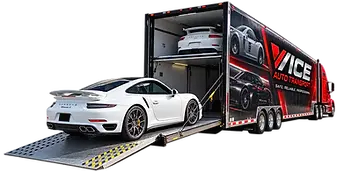
The pickup location and the type of trailer often go hand in hand. Open transport is the most common option because it is cost-effective and widely available. For standard sedans, SUVs, pickup trucks, and daily drivers, it is usually the practical choice.
Enclosed transport makes more sense for high-value vehicles, collector cars, exotics, custom builds, and motorcycles that need additional protection from road exposure. But enclosed trailers can have their own access limitations depending on size and ramp angle. In some residential settings, smaller equipment or a different loading point may be the better answer.
This is one of those it-depends moments. The right setup is not just about the vehicle's value. It is also about the property layout, timing, and route.
Cost factors people should understand upfront
Residential pickup is convenient, but price is still shaped by the same factors that affect any auto shipment. Distance is a major one, along with vehicle size, transport type, season, route demand, and timing flexibility.
If your address is easy to reach on a high-traffic shipping lane, pricing tends to be more competitive. If you are in a remote area, on a less common route, or need specialized equipment such as a flatbed, hotshot truck with ramps, step-deck, or RGN, the cost can change accordingly. Short-notice scheduling can also push rates up if the carrier needs to fit in an urgent pickup.
The cheapest quote is not always the best fit. A realistic quote backed by responsive communication usually saves more stress than a low number that falls apart when scheduling begins.
Preparing your vehicle for home pickup
Most customers only need a short checklist before pickup. The vehicle should be reasonably clean so the condition inspection is clear. Remove personal items unless you have been told otherwise, keep the gas tank around a quarter full, and make sure the battery is charged and tires are properly inflated.
If the car has mechanical issues, tell the transport company in advance. Non-running vehicles can still be moved, but they may require different equipment and planning. The same goes for oversized trucks, lifted vehicles, lowered cars, or anything with unusual clearance concerns.
Keys should be ready, alarm instructions should be shared if needed, and someone authorized should be available during the pickup window. Small preparation steps make a noticeable difference once the truck arrives.
When residential pickup is the best option
This service tends to make the most sense when convenience is the priority and the address has workable access. It is a strong fit for household moves, state-to-state relocations, seasonal travel, college transitions, estate situations, and long-distance vehicle purchases.
It is also a good option for customers who do not want the added errand of terminal drop-off or who are coordinating multiple parts of a move at once. If you are shipping a vehicle while arranging housing, flights, movers, or family schedules, reducing one trip can help a lot.
For more specialized transport, residential pickup can still work well, but the planning needs to be tighter. Equipment type, route design, and local access matter more when the load is unusual.
Choosing a company that handles the details well
The difference between a smooth pickup and a frustrating one usually comes down to communication. You want clear expectations about timing, access, vehicle condition, trailer type, and what happens if the truck cannot safely reach the exact address.
That is where hands-on support matters. A company like Vice Auto Transport works best for customers who want direct answers, practical options, and service that fits real-world logistics, not just a generic quote form. If your shipment involves a standard family SUV, a classic car, or a route that includes non-contiguous U.S. destinations, the details at pickup matter just as much as the miles in transit.
A residential vehicle pickup service is valuable because it removes friction from the shipping process. The best approach is simple: be clear about the vehicle, be honest about the location, and work with a transport team that plans for reality instead of promising perfection. That is usually how you get the convenience you wanted in the first place.


Comments