

Are Auction Vehicles Insured During Transit?

The question “are auction vehicles insured transit” usually comes up right after a winning bid, when the excitement of buying a vehicle turns into a practical concern: what happens if something goes wrong before it reaches your driveway? The honest answer is that auction vehicles can be insured during transport, but coverage is not automatic, unlimited, or the same at every stage of the process.
A vehicle at Copart, IAA, Manheim, or another auction may be covered under one set of rules while it is on auction property, then move under a carrier’s cargo policy once it is loaded for shipment. The details matter, especially with salvage, non-running, high-value, or condition-sensitive vehicles.
Are auction vehicles insured in transit?
Generally, a properly licensed auto carrier should carry cargo insurance that applies to vehicles in its care, custody, and control during transport. That is the insurance most buyers are referring to when they ask whether an auction purchase is covered in transit.
But carrier cargo coverage is not a blank check. The policy has limits, exclusions, deductibles, and claim requirements. It also applies only during the portion of the move when the carrier has possession of the vehicle. Damage that occurred in the auction yard, before pickup, after delivery, or because of an undisclosed vehicle condition can be a different matter entirely.
The right question is not simply, “Is it insured?” Ask: “Who is responsible at each point, what documentation exists, and what specifically would the carrier’s policy cover?”
Coverage changes as the vehicle changes hands
An auction vehicle often passes through several hands before it reaches you. Each handoff can affect responsibility.
While the vehicle is still on auction property, the auction’s terms and any protection product you purchased control the situation. Auctions commonly have strict rules around storage, release deadlines, gate passes, loading assistance, and pre-existing damage. Some offer optional insurance or protection programs, but those programs vary by auction, location, vehicle type, and sale status. Never assume an auction’s standard rules cover theft, weather damage, vandalism, or mechanical issues after the sale.
Once a carrier arrives, the condition report becomes central. The driver should inspect the vehicle and record visible damage on the bill of lading or vehicle condition report before loading. For an inoperable auction vehicle, the report may be less complete if the car is tightly parked, dirty, blocked in, or unable to be fully inspected. That does not mean you should skip documentation. It means you should be more deliberate about it.
After the vehicle is delivered and signed for, the delivery inspection is your opportunity to compare its condition against the pickup report. If there is new, visible transport-related damage, it should be noted before you sign a clean delivery receipt. A clean signature can make a later claim much harder.
What carrier cargo insurance usually covers
Carrier cargo insurance is designed for direct physical damage that occurs while a vehicle is being transported. For example, it may apply if a vehicle is damaged in a roadway accident, struck by another vehicle during loading, or damaged by a transport-related incident.
That does not mean every problem discovered at delivery is a cargo claim. Cargo insurance generally does not cover existing damage, normal road dust on an open trailer, mechanical failure, leaking fluids caused by a pre-existing issue, personal items left inside the vehicle, or defects that were present but not visible during pickup.
Auction purchases create another complication: condition reports can be incomplete, and online auction photos may be days or weeks old. A vehicle listed as “run and drive” may still have mechanical or electrical problems. A car that starts at pickup may not start after delivery for reasons unrelated to transport. Cargo insurance is not a warranty on the vehicle’s condition or auction description.
Policy limits matter as well. A carrier may have a total cargo limit for the entire load, not a separate amount for every vehicle on the trailer. This is particularly relevant for luxury, exotic, classic, or collector vehicles. If your purchase has significant value, confirm that the carrier’s cargo limit is appropriate for the vehicle before it is assigned.
Open transport versus enclosed transport
Open transport is the standard choice for many auction purchases because it is widely available and usually more cost-effective. It is a practical option for daily drivers, dealer inventory, and many salvage vehicles. Cars on an open trailer are exposed to normal road conditions, including weather, dust, and road grime, just as they would be if driven.
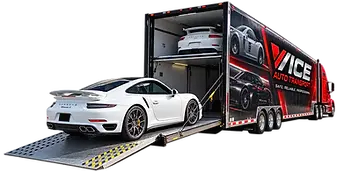
Enclosed transport provides more protection from the elements and can make sense for high-value vehicles, classics, luxury cars, or a clean-title purchase where cosmetic condition is especially important. It does not eliminate the possibility of damage, and it does not replace insurance, but it reduces exposure during the trip.
The choice depends on the vehicle, its value, its condition, the route, and your budget. Shipping a salvage vehicle enclosed rarely makes financial sense. Shipping a collector car or a recently restored vehicle open may not match the level of protection you want.
Auction-yard risks are different from transit risks
A lot can happen before a vehicle is loaded. Auction facilities are busy environments, and vehicles may be moved around the yard, stacked closely, exposed to weather, or awaiting release. Storage fees can also build quickly if pickup is delayed.
This is why timing matters. A carrier needs the correct lot number, buyer number or release information, vehicle identification number, pickup authorization, and a realistic understanding of whether the car runs. If the auction says a vehicle requires a forklift, has missing wheels, is blocked in, or cannot roll or steer, that needs to be disclosed before dispatching transport.
Improper pickup details can lead to a failed pickup, extra auction charges, or the need for specialized equipment. Those issues are not usually insurance claims. They are coordination issues, and they are easier to prevent than fix.
How to protect an auction vehicle before shipping
Start by saving the auction listing, condition report, photos, and any announcements attached to the sale. Take screenshots before the listing disappears or changes. If the auction allows you or a representative to inspect the car, get current photos from every angle, including the roof, wheels, glass, interior, and undercarriage if possible.
Make sure the transport company knows whether the vehicle runs, rolls, steers, and brakes. “Non-running” is not one condition. A vehicle that rolls freely is very different from one with locked wheels, no keys, a flat tire, or front-end damage that prevents loading. Accurate information helps arrange the right carrier and avoids trouble at the auction gate.
Before pickup, ask for the assigned carrier’s insurance information and confirm that it is active and suitable for your vehicle’s value. A reputable auto transport broker can help coordinate this process and confirm the carrier details, but the carrier is the party physically moving the vehicle and carrying the cargo coverage.
At delivery, inspect before signing. Look at the areas most likely to show fresh transport damage: bumpers, rocker panels, mirrors, roofline, wheels, windshield, and doors. If the vehicle is arriving after dark, use a flashlight and take clear photos. If something appears new, write it on the delivery paperwork and notify the transport coordinator right away.
What to do if you find damage
Do not panic, but do not wait. Document the issue with photos and video, including a wider shot showing the whole vehicle and close-ups of the damage. Photograph the delivery receipt and the pickup condition report. Keep the auction photos and listing records available in case the condition before pickup becomes disputed.
Report the issue to the carrier and your transport coordinator promptly. A legitimate claim typically requires evidence that the damage was new, occurred while the carrier had possession, and was identified at or immediately after delivery. The more complete the paperwork, the cleaner that process tends to be.
If the issue is mechanical rather than visible body damage, the claim may be more difficult. Auction vehicles can arrive with battery problems, warning lights, fluid leaks, suspension damage, or engine issues that were not caused by transport. A qualified inspection may be needed to determine the cause.
Personal insurance can be worth a call
Your own auto policy may provide some coverage for a newly purchased vehicle, but that depends on your insurer, the type of policy, whether the vehicle is eligible for coverage, and how quickly you add it. Salvage-title vehicles, vehicles awaiting repair, and auction purchases can have special restrictions.
Call your insurance agent before pickup if the vehicle has meaningful value. Ask whether the policy covers the car while it is in transit, whether comprehensive coverage applies, and whether there is a deadline for adding a newly acquired vehicle. Do not rely on assumptions or on a carrier’s insurance alone for a vehicle you cannot afford to lose.
Buying at auction already involves a few unknowns. Transport should not add unnecessary confusion. Get the pickup details right, use a properly insured carrier, keep your documentation, and inspect the vehicle carefully at delivery. When you are ready to move the vehicle, Vice Auto Transport can help coordinate the details so you know what to expect before the miles begin.


Comments