.png)


Auto Transport Insurance Explained Simply

When your vehicle is loaded onto a trailer, the question gets real fast: if something happens on the road, who pays? That is where auto transport insurance matters. It is one of the most important parts of shipping a car, truck, motorcycle, or specialty vehicle, and it is also one of the most misunderstood.
A lot of customers assume their personal auto policy covers every possible issue during shipping. Others assume the carrier's policy covers absolutely everything, no matter what. Neither assumption is safe. The real answer depends on the type of carrier coverage, the condition of the vehicle before pickup, the shipping method, and how any damage is documented.
What auto transport insurance usually covers
In most vehicle shipping situations, the carrier carries cargo insurance. This is the policy designed to cover damage to vehicles while they are in the carrier's care, custody, and control during transport. If a vehicle is damaged during loading, unloading, or while in transit, that policy may respond.
That does not mean every scratch, chip, or mechanical problem is automatically covered. Cargo insurance generally applies to transport-related damage. If your radiator fails because of a pre-existing issue, that is different from damage caused by a loading incident. If a low-hanging spoiler gets scraped because the vehicle sits too low and that risk was not clearly addressed ahead of time, the details matter.
Coverage limits matter too. A carrier may be insured, but the policy still has a maximum payout. That matters more with luxury vehicles, lifted trucks, classics, exotics, and custom builds. A standard policy limit may be fine for a daily driver but not enough for a six-figure collector car.
What auto transport insurance does not always cover
This is where customers run into trouble. Auto transport insurance is not a blanket warranty on the full condition of your vehicle. There are common exclusions and gray areas.
Personal items inside the vehicle are a big one. Many carriers either do not cover them at all or severely limit coverage. Even when a small amount of luggage is allowed, it can create weight issues or liability concerns. If something inside the car shifts and causes interior damage, that can turn into a dispute.
Pre-existing damage is another issue. If dents, paint chips, cracked glass, or bumper damage are already present before pickup, the carrier's insurer is not there to pay for repairs that were needed before transport began. That is why inspection at pickup is not a formality. It is the baseline record for any later claim.
There is also a difference between damage caused by transport and damage tied to mechanical condition. If a vehicle has fluid leaks, suspension problems, a weak battery, or brake issues, those conditions can complicate loading and unloading. In some cases, they can even increase the risk of incidental issues that are not fully insurable in the way customers expect.
Why the Bill of Lading matters so much
The Bill of Lading is one of the most important documents in vehicle shipping. It serves as both a transport receipt and a condition report. At pickup, the driver notes visible vehicle condition. At delivery, the vehicle is inspected again.
If there is new damage, it needs to be recorded on the delivery paperwork before the driver leaves. That step is critical. A customer who signs off without noting damage may have a harder time proving the issue happened during transit.
This is one reason clear communication matters just as much as coverage limits. Good transport coordination is not only about finding a truck. It is about making sure the paperwork, inspection process, and expectations are handled correctly from the start.
Open vs. enclosed transport and insurance risk
Open transport is the most common and usually the most budget-friendly option. It is efficient, widely available, and a practical fit for standard vehicles. It is also more exposed to weather and road debris than enclosed shipping. That does not mean it is unsafe. It means the risk profile is different.
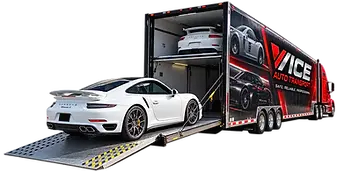
Enclosed transport offers added protection from outside elements and is often the better fit for high-value, rare, restored, or highly customized vehicles. It can also be the smarter option for very low-clearance cars that need more careful handling.
From an insurance standpoint, enclosed transport does not automatically mean better coverage, but it often aligns with carriers that specialize in premium vehicles and may carry higher cargo limits. That is worth confirming instead of assuming.
Questions to ask before you book
If you are comparing quotes, insurance should be part of the conversation, not an afterthought. Ask what cargo coverage the carrier carries and whether the policy limit fits your vehicle's value. Ask whether there are exclusions for modified vehicles, inoperable units, or personal contents.
Also ask how claims are handled. If damage occurs, who do you contact first? What documentation is required? How quickly should the issue be reported? A company that arranges transport should be able to walk you through that process in plain language.
If you are shipping to or from Alaska, Hawaii, Puerto Rico, Guam, or the U.S. Virgin Islands, the route may involve port handling or multiple transport stages. That can add complexity. In those cases, you want to know where responsibility begins and ends at each handoff.
How to protect yourself before pickup
Good preparation reduces confusion and makes legitimate claims easier to resolve. Start by washing the vehicle. A clean surface makes it easier to spot existing scratches, dents, and paint flaws. Then take clear photos from multiple angles, including close-ups of any pre-existing damage.
Remove personal items unless you have been specifically told a limited amount is allowed. Fold in mirrors when appropriate, secure loose parts, and make sure the battery is charged and the tires are properly inflated if the vehicle is operable. If the vehicle has quirks like a tricky ignition, low ground clearance, or a hidden kill switch, disclose that before pickup.
Leave only about a quarter tank of fuel unless instructed otherwise. More fuel adds unnecessary weight. And if the vehicle is modified, let the transport coordinator know the exact situation. Lift kits, oversized tires, lowered suspensions, and custom body pieces can affect both equipment selection and handling.
If damage happens, move quickly and stay organized
Most deliveries go smoothly, but if damage appears, do not wait. Inspect the vehicle carefully before signing final paperwork. Note any new issues on the Bill of Lading, take dated photos, and contact the transport company right away.
A clean claim usually depends on timing and documentation. If the condition is recorded at delivery and supported with photos, the process is more straightforward. If the issue is discovered days later with no notation on the paperwork, the situation gets harder fast.
This is where working with a responsive company matters. Customers do not want to chase answers when a problem needs attention. They want direct communication, clear next steps, and someone who understands how transport claims work.
The bottom line on coverage and peace of mind
Auto transport insurance should give you confidence, but only when you understand what it actually does. It helps protect against transport-related damage while the vehicle is in the carrier's care. It does not replace careful inspection, accurate paperwork, or honest disclosure about vehicle condition.
For some customers, standard carrier coverage is enough. For others, especially those shipping collector cars, exotic vehicles, motorcycles, machinery, or specialized equipment, it makes sense to ask more detailed questions before booking. The right setup depends on the value of what you are shipping, the route, the trailer type, and how much risk you are comfortable carrying.
At Vice Auto Transport, that is the kind of conversation worth having upfront. A few clear questions before dispatch can save a lot of stress later. If you treat insurance as part of the shipping plan instead of fine print at the end, you put yourself in a much better position from pickup to delivery.
The best protection is not just having coverage on paper. It is knowing exactly what is covered before your vehicle ever leaves the driveway.


Comments