.png)


Broker vs Carrier Transport: What to Choose

You get a quote to ship your car, and the first question that comes up is simple: am I hiring the truck that moves it, or the company that arranges the move? That is the core of broker vs carrier transport, and the answer affects price, communication, flexibility, and how fast your vehicle gets scheduled.
For many customers, this is where auto transport starts to feel more complicated than it should. A first-time shipper may assume every transport company owns trucks. An experienced dealership or fleet manager may already know that many shipments are coordinated through a network. Neither setup is automatically better. The right fit depends on your route, your timeline, the type of vehicle, and how much flexibility you need.
Broker vs carrier transport in plain terms
A carrier is the company with the truck, trailer, driver, and operating authority to physically transport the vehicle. If your car is loaded on an open trailer from Texas to Florida, the carrier is the one doing the hauling.
A broker arranges the shipment by connecting your load with a licensed carrier. The broker handles the quote, scheduling process, customer communication, and carrier selection. In many cases, the broker does not own the truck that performs the transport.
That distinction matters, but it should not be treated like a good-versus-bad decision. Brokers and carriers do different jobs. A carrier provides transport capacity. A broker provides access, coordination, and options.
Why brokers exist in auto transport
Auto transport is not like ordering a package from a single delivery fleet. Routes shift daily. Truck space changes by region, season, and equipment type. A single carrier may run strong lanes in the Southeast and Midwest but have limited availability to Alaska, Hawaii, Puerto Rico, Guam, or the U.S. Virgin Islands.
That is where a broker can be valuable. Instead of waiting on one company’s truck network, you gain access to a wider pool of available carriers and trailer types. That can be especially helpful if you are shipping from a rural area, buying a vehicle across the country, moving on short notice, or transporting something that needs enclosed, flatbed, hotshot, step-deck, or RGN service.
For customers, the practical benefit is simple: more reach and more flexibility. The trade-off is that the company you first speak with may not be the same company driving the truck.
When going direct with a carrier makes sense
There are situations where booking directly with a carrier works well. If the carrier already runs your route regularly, has the right equipment, and has pickup windows that match your schedule, the process can be straightforward.
Some customers prefer that direct relationship. They like knowing who owns the truck and who will likely handle the vehicle from pickup to delivery. For repeat lanes, commercial accounts, dealership runs, and local or regional moves, that can be efficient.
But there is a limit. A carrier can only offer what its own fleet and route map allow. If your schedule slips, your lane is less common, or your shipment needs a different trailer setup than expected, your options may narrow quickly.
The biggest differences in broker vs carrier transport
The main difference is not just who answers the phone. It is how your shipment gets sourced and managed.
With a carrier, capacity is tied to that company’s own trucks, drivers, and equipment. With a broker, capacity comes from a larger network of carriers. That often means a broker can shop for availability more effectively, especially on difficult lanes or specialty loads.
Pricing works differently too. A direct carrier quote reflects what that carrier needs to run the job. A broker quote includes the carrier’s rate plus the broker’s coordination margin. Some customers see that and assume direct is always cheaper. Sometimes it is. Sometimes it is not.
A direct carrier may quote higher if the route does not fit well into its schedule. A broker may find a better-matched carrier at a more competitive rate. The opposite can also happen. Price depends on route demand, season, fuel, equipment, timing, and how easy the load is to place.
Communication is another factor. With a carrier, communication may be more direct but less staffed, especially if the office is small and the driver is on the road. With a broker, communication is often more customer-facing because coordination is part of the service. The best setup is the one that gives you clear updates and realistic expectations, not just the one that sounds simpler on paper.
What customers usually get wrong
A common mistake is treating broker as middleman and carrier as better by default. That misses how the industry actually works.
A strong broker can save time, widen your options, and help match your vehicle with the right equipment and route. That matters if you are shipping a luxury car in an enclosed trailer, moving a lifted truck that may need a specific loading setup, or trying to reach a port connection for Hawaii or Puerto Rico.
A common mistake on the other side is assuming every carrier can handle every move. Not all carriers serve every region. Not all of them offer enclosed transport, hotshot service, or oversized equipment hauling. Not all of them want difficult pickups in remote neighborhoods, low-clearance garages, or non-running vehicle situations.
The real question is not broker or carrier in the abstract. It is who can get this shipment moved correctly, on a reasonable timeline, with the right equipment and communication.
How to choose between broker vs carrier transport
Start with your route. If you are shipping on a major lane between large metro areas, both brokered and direct carrier options may be easy to find. If you are shipping to or from a less common market, island destination, or rural pickup area, a broker’s network can make a big difference.
Next, look at the vehicle itself. Standard sedans and SUVs usually fit open transport without much complication. Collector cars, exotics, lowered vehicles, inoperable units, heavy-duty trucks, and equipment often need more planning. In those cases, matching the shipment to the right trailer matters more than whether the first contact is a broker or a carrier.
Then consider timing. If you need flexibility and just want the best fit within a pickup window, a broker can often provide more options. If you know a direct carrier already services your route and can commit to your dates, that may work well too.
Finally, pay attention to transparency. Ask whether the company is acting as a broker or carrier. Ask what type of trailer is expected. Ask how updates are handled, how pickup windows work, and what happens if your route takes longer to assign than expected. Clear answers are usually a better sign than a low quote.
Questions worth asking before you book
If you want to compare options without getting lost in sales talk, keep it practical. Ask who will actually transport the vehicle. Ask whether the company has handled your route before. Ask if the price is realistic for current market conditions or just designed to get your order first.
You should also ask about insurance, inspection procedures, and whether the pickup or delivery location may need to be adjusted for truck access. Large carriers and brokered carriers alike often meet at nearby lots, wider streets, or shopping centers when residential streets are too tight for a trailer.
That is normal. What matters is hearing about it before pickup day, not after.
Which option is better for most people?
For many individual customers, broker vs carrier transport is less about picking a side and more about picking the right service model for the move. If your shipment is simple, your route is common, and a direct carrier is available at a fair rate, booking direct can be a solid choice.
If your route is harder, your timeline is tighter, or your shipment needs more than a standard open trailer, a broker often gives you more workable options. That is especially true for coast-to-island moves, specialty equipment, or customers who want one point of contact managing the process from quote to delivery.
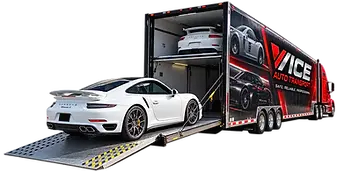
Companies like Vice Auto Transport operate in the space where that flexibility matters. When a shipment could involve open transport, enclosed service, hotshot with ramps, flatbeds, or port-based coordination, the value is not just finding a truck. It is finding the right truck without making the customer chase every moving part.
The smart move is to focus less on labels and more on execution. Ask who is responsible, how your vehicle will move, and whether the plan fits your route and budget. If the answers are clear, the shipment usually goes smoother. If they are vague, keep asking until they are not.
A good transport experience rarely starts with the cheapest quote. It starts with a realistic plan and a company that tells you exactly how the move will work.


Comments