.png)


Open vs Enclosed Transport: Which Fits?

A lot of customers ask the same question right after they get a quote: should I book open vs enclosed transport? It is a fair question, because the right answer depends on what you are shipping, where it is going, and how much protection you want along the way.
If you are moving a daily driver from Texas to Florida, open transport usually makes the most sense. If you are shipping a restored classic to a show, an exotic car to a buyer, or a motorcycle that cannot risk road exposure, enclosed may be the smarter call. Both options are legitimate, both are used every day, and neither is automatically better in every situation.
Open vs enclosed transport at a glance
Open transport is the standard car shipping method most people see on highways. Vehicles are loaded onto an open trailer, typically in two levels, and transported with no outer walls or roof around them. This is the most common setup because it is efficient, widely available, and cost-effective.
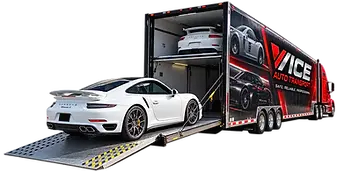
Enclosed transport places the vehicle inside a covered trailer. That extra structure shields it from weather, road debris, and general exposure during transit. Enclosed trailers also tend to carry fewer vehicles at a time, which can mean a more specialized service experience.
The big difference in open vs enclosed transport is not whether one works and the other does not. Both work. The question is whether your shipment needs standard protection at a lower cost or added protection at a higher price.
Cost: where most decisions start
For most customers, price is the first real filter. Open transport is usually the more budget-friendly option because there are more open carriers on the road and they can move more vehicles per trip. That efficiency keeps rates lower in most lanes.
Enclosed transport costs more because the equipment is more specialized, availability is more limited, and the service is often used for higher-value vehicles that require extra care. If you are comparing quotes and enclosed pricing comes in noticeably higher, that is normal.
That said, price should be weighed against the vehicle itself. Spending more on enclosed shipping can make sense when the vehicle value, finish, rarity, or owner expectations justify the extra protection. On the other hand, paying enclosed rates for a standard commuter car often does not deliver much practical benefit.
Protection and exposure on the road
This is where enclosed shipping earns its reputation. A covered trailer helps protect the vehicle from rain, snow, dust, road grime, and flying debris kicked up by traffic. It also reduces visibility, which some owners prefer when shipping luxury, antique, or collector vehicles.
Open shipping does expose the vehicle to normal road conditions. That does not mean damage is expected. Millions of vehicles are moved safely on open trailers every year. But if your concern is minimizing exposure as much as possible, enclosed transport has the clear advantage.
A good way to think about it is this: open shipping is practical protection for everyday transport needs, while enclosed shipping is added protection for vehicles where condition matters at a higher level.
What types of vehicles usually go open
Open transport is the right fit for many common shipments. Daily drivers, SUVs, pickup trucks, college cars, family vehicles, and dealer inventory are often moved this way. It is also common for relocations, military-style moves, seasonal snowbird shipping, and online vehicle purchases where the goal is dependable delivery at a reasonable rate.
If the vehicle is used regularly, has average market value, and does not require white-glove handling, open transport is often the most sensible choice. It is especially practical when customers are balancing timing, cost, and convenience.
For many first-time shippers, the simplest answer is also the correct one. If your vehicle does not need special handling, open transport is usually enough.
When enclosed transport makes more sense
Enclosed transport is often chosen for classic cars, exotic cars, luxury vehicles, custom builds, low-clearance vehicles, show cars, and motorcycles. It is also worth considering for freshly painted vehicles or anything with a finish that the owner wants to keep as protected as possible.
Sometimes the decision has less to do with resale value and more to do with emotional value. A car that has been restored over years, passed down through family, or built for events may deserve a different level of care than a standard vehicle used for errands and commuting.
There are also route and season factors. If you are shipping through areas known for rough weather, enclosed service may provide peace of mind that feels worth the extra cost.
Availability and scheduling can differ
Open carriers are more common, which usually means more scheduling flexibility. If you need a standard car moved from one major metro area to another, there is a good chance open options will be easier to find and easier to price competitively.
Enclosed transport can take more planning. There are fewer enclosed carriers, and they may serve certain routes less frequently. On a popular lane, that may not be a problem. On a remote pickup or delivery route, or for service involving ports and non-contiguous destinations, enclosed scheduling may require more lead time.
This is one reason customers should not choose purely on preference without considering timing. If your deadline is tight, availability may influence the best option as much as the vehicle type does.
Open vs enclosed transport for long-distance moves
Long-distance shipping tends to make people think harder about protection. That is understandable. More miles can mean more exposure, more weather variation, and more chances for small road-related wear.
Still, open transport remains the most common choice for long-distance moves because it keeps costs manageable. A cross-country shipment on an open trailer is normal and often the best fit for standard vehicles.
Enclosed shipping becomes more compelling on long routes when the vehicle is high-value or highly sensitive to condition. If the car is going from a private collection, dealership showroom, auction purchase, or specialty seller, enclosed may be worth it for the added control and coverage.
It is not only about the trailer
Customers sometimes frame this as a simple equipment choice, but the trailer is only one part of the move. Pickup access, delivery access, route, vehicle dimensions, ground clearance, running condition, and destination all matter too.
For example, a low-clearance sports car may benefit from enclosed shipping, but it may also need a lift gate or careful loading approach. A larger truck may fit best on open equipment simply because of size and practical routing. A shipment to Hawaii, Puerto Rico, Guam, Alaska, or the U.S. Virgin Islands may involve added coordination beyond the over-the-road portion.
That is why a quote should match the actual shipment, not just a general preference. The best choice is the one that fits the vehicle, the lane, and the timing.
How to choose without overthinking it
If you are deciding between open vs enclosed transport, start with three questions. What is the vehicle worth, financially or personally? How much exposure are you comfortable with? And does your budget support paying more for added protection?
If the car is a standard daily driver and price matters, open is usually the smart move. If the car is rare, expensive, restored, or difficult to replace, enclosed is often worth a serious look. If you are still unsure, the most helpful step is talking through the route and vehicle details with someone who arranges these shipments every day.
A good transport company should not push enclosed service just because it costs more, and it should not steer you into open service if the vehicle clearly needs better protection. The right recommendation is based on use case, not sales pressure.
At Vice Auto Transport, that is how we approach it. The goal is to match the transport method to the shipment, keep communication clear, and give customers a realistic option that fits both the vehicle and the budget.
Final thought
The best shipping choice is rarely about chasing the cheapest rate or the highest level of coverage on principle. It is about fit. When the trailer, timing, and protection level line up with the vehicle you are moving, the whole process gets a lot easier.


Comments