.png)


Door to Port Shipping for Vehicles Explained

If your vehicle needs to get from your driveway, dealership, auction, or job site to an ocean port, door to port shipping is usually the most practical way to handle it. Instead of arranging inland transport on your own and then coordinating a separate port drop, you book one service that covers pickup at the starting point and delivery to the port for departure.
That sounds simple, but the details matter. The type of vehicle, pickup location, trailer access, destination port, and timing all affect how the job should be set up. For customers moving a family car to Hawaii, sending a truck to Puerto Rico, relocating equipment to Guam, or managing fleet units headed offshore, the right plan saves time and avoids expensive missteps.
What door to port shipping actually means
Door to port shipping starts with pickup at a residence, business, auction, storage yard, dealership, or other agreed location. The vehicle is then transported over land to a designated port, where it is delivered for the next leg of its trip.
The "door" part does not always mean a truck can pull directly into a narrow neighborhood street or a gated property with low branches. In transport, it usually means pickup as close to your location as it is safely and legally possible. If a large carrier cannot access the address, pickup may happen at a nearby parking lot, terminal area, or wider roadway.
The "port" part means the inland carrier’s responsibility ends at the port receiving location, based on the booking terms. That matters because some customers assume the service includes ocean freight, port fees, export documentation, or final delivery on the other side. Sometimes it does when bundled with a broader shipment plan, and sometimes it does not. The scope should always be clear before the order is placed.
When door to port shipping makes sense
This option fits customers who want fewer moving parts. If you are already juggling a household move, military-style relocation, vehicle purchase, or commercial shipment, arranging local transport separately can create unnecessary delays.
It also makes sense when the departure port is several states away. A customer in Arizona shipping a car to Hawaii, for example, may need inland transport to a West Coast port before the vehicle can continue by sea. The same applies to vehicles headed to Alaska, Puerto Rico, Guam, or the U.S. Virgin Islands.
For dealers, fleet managers, and equipment owners, door to port shipping can simplify scheduling. One coordinated move is easier to track than piecing together multiple vendors, especially when there is a delivery window at the port that needs to be met.
How the process usually works
The first step is confirming the basics: what is being shipped, where it is located, which port it needs to reach, and when it has to be there. A standard sedan and an oversized lifted truck are very different shipments. A running SUV can often move on an open carrier, while a low-clearance exotic, inoperable vehicle, or piece of machinery may need enclosed transport, a flatbed, or ramp-equipped equipment.
Once the shipment details are reviewed, the route and trailer type are matched to the load. From there, pickup is scheduled based on carrier availability, location, and the required port delivery date.
At pickup, the vehicle is inspected and its condition is documented. The carrier then transports it to the port receiving point. Depending on the shipment setup, the customer may also need to provide identification, title or lienholder information, booking references, or port-specific paperwork before delivery can be accepted.
This is where experience helps. Port delivery is not just a regular drop-off with a different address. Ports operate on appointment rules, cutoff times, documentation requirements, and security procedures. Missing one piece can delay the handoff.
Door to port shipping vs. door to door
Customers often compare door to port shipping with standard door-to-door service, but they solve different problems. Door-to-door is best when the vehicle is staying on land and needs pickup at one address and delivery near another address. Door to port is built for shipments that need to reach a maritime departure point.
The trade-off is that door to port gets the vehicle to the port, not necessarily through every step after that. If you need complete coordination from your home to a final destination in Alaska, Hawaii, or another offshore market, you may need a broader service package that includes the ocean leg and possibly port-to-door delivery on arrival.
That is why the cheapest quote is not always the best quote. A lower inland transport rate may leave out steps you assumed were covered.
What affects the price
Distance is a major factor, but it is not the only one. Vehicle size and weight matter because they affect trailer space and loading options. A compact car is easier to place than a heavy-duty pickup, oversize van, or machine with unusual dimensions.
Condition matters too. If the unit does not run, steer, brake, or roll, it may require special handling and equipment. That usually increases cost.
Timing can also change the price. If the shipment needs to hit a strict port cutoff, the carrier may need to prioritize the move, use a more direct route, or assign specialized equipment sooner than usual. Seasonal demand plays a role as well, especially on routes tied to snowbird traffic, military moves, and island-bound shipping cycles.
The final factor is access. Rural pickups, crowded urban streets, gated facilities, and restricted port procedures all add complexity. None of these issues make the shipment impossible, but they do affect planning and cost.
Choosing the right transport setup
Open carrier transport is the most common and budget-friendly option for standard running vehicles. It works well for many sedans, SUVs, and trucks headed to port.
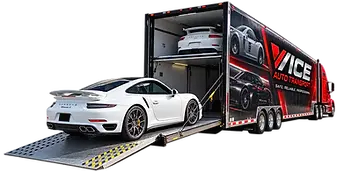
Enclosed transport is often the better fit for collector cars, luxury vehicles, specialty builds, and anything with paint or bodywork that needs extra protection. It costs more, but for high-value vehicles the extra care is often worth it.
For equipment, oversized trucks, or vehicles that do not operate under their own power, flatbeds, step-decks, hotshot trucks with ramps, or other specialized setups may be needed. This is one area where guessing can create delays. If the vehicle has low ground clearance, oversized tires, modifications, or mechanical issues, say so upfront.
A hands-on logistics company will ask those questions before dispatch, not after a driver arrives and discovers the load will not fit the trailer.
What customers should do before pickup
A little preparation goes a long way. Remove personal items unless the shipment terms specifically allow them. Make sure the vehicle is reasonably clean so its condition can be documented. Leave only about a quarter tank of fuel unless different instructions are provided.
You should also confirm that the battery is charged, the tires hold air, and there are no active fluid leaks. If the vehicle has quirks, such as a tricky ignition, low front bumper, manual parking brake issue, or alarm system, let the carrier know in advance.
Most of all, make sure your paperwork matches the shipment. Ports are strict for good reason. If names, VIN details, booking references, or required release documents do not line up, delivery can stall.
Common misunderstandings about door to port shipping
One common mistake is assuming every carrier can deliver to every port. Port access varies, and some shipments require specific procedures or approved receiving instructions.
Another misunderstanding is timing. Customers sometimes think once the vehicle is picked up, the rest is automatic. In reality, port delivery depends on route conditions, scheduling, cutoff windows, and paperwork readiness. Building in a little cushion is smarter than planning to the last hour.
The last big misconception is that all shipments should use the same equipment. They should not. A family SUV, a lowered sports car, and a piece of compact machinery do not move the same way. Good planning starts with the actual load, not a one-size-fits-all rate.
Why communication matters more than most people expect
Door to port shipping works best when expectations are clear from the start. Customers need to know what is included, where responsibility begins and ends, what documents are needed, and how pickup and port delivery will be handled.
That is especially true for first-time shippers. The process is not difficult, but it does involve more coordination than a basic point-to-point auto move. Working with a company that explains the route, equipment, timing, and handoff in plain language makes the whole shipment easier to manage. That practical, responsive approach is exactly why many customers use Vice Auto Transport for moves that go beyond standard domestic delivery.
If your vehicle is heading offshore, the best next step is not to chase the lowest number. It is to get the shipment mapped correctly, ask what is included, and make sure the route to the port is handled by people who do this every day.


Comments