.png)


Relocating? Can You Pack Your Car for Shipping?

Can You Put Personal Belongings in Your Car When Shipping It to Another State?
Moving day has a way of creating one last pile: the things that won't fit in the moving truck, suitcase, or overhead bin.
If you're relocating and wondering whether you can pack personal belongings inside your car when shipping it to another state, the answer is: sometimes, within reasonable limits.
Many auto transport carriers will consider allowing a modest amount of personal property inside the vehicle. However, the amount permitted depends on the carrier, trailer type, available weight capacity, and what you're planning to pack.
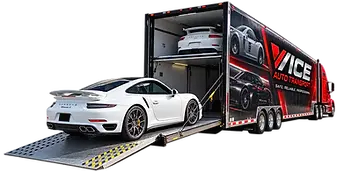
Enclosed auto transport carriers are often more flexible than open carriers when it comes to personal belongings, particularly when operating smaller trailers with fewer vehicles. But that doesn't mean unlimited packing is allowed.
Most importantly, personal belongings generally aren't covered by the carrier's vehicle cargo insurance.
Whether you're moving from Southern California to South Florida, New York to Atlanta, Pennsylvania to California, or Tennessee to Los Angeles, understanding the rules before pickup can prevent delays, additional charges, and unnecessary headaches.
Here's what you should know.
Can You Put Things Inside a Car When Shipping It?
Yes, some auto transport carriers allow customers to leave a limited amount of personal belongings inside their vehicles.
For standard open-carrier shipments, a commonly used guideline is approximately 100 pounds of personal items, usually secured in the trunk or rear cargo area and kept below the window line.
However, this is not an industry-wide guarantee or a universal legal allowance.
Some carriers accept more, some accept less, and others prohibit personal belongings entirely.
The assigned carrier makes the final decision based on its equipment, weight restrictions, insurance requirements, and operating policies.
That's why you should always disclose your intended belongings to your transport coordinator before the vehicle is dispatched.
Why Do Carriers Limit Personal Belongings?
Auto transport trailers are designed to move vehicles, not household goods.
Multi-car carriers must operate within applicable vehicle weight and axle limits.
An extra 150 or 200 pounds inside several vehicles can add up quickly.
Excess belongings can also create other problems:
Items shifting during loading or transit
Obstructed visibility when moving the vehicle
Additional weight affecting trailer loading
Unsecured objects damaging the vehicle's interior
Insurance complications
Carrier policy or regulatory restrictions
A carrier may ask you to remove items before loading if the vehicle doesn't meet its requirements.
The best approach is to confirm what's acceptable before pickup day.
Open vs. Enclosed Auto Transport: Which Allows More Personal Items?
The type of trailer can make a difference in how much flexibility a carrier is willing to offer.
However, neither open nor enclosed transportation automatically authorizes customers to load household belongings into a vehicle.
Personal Belongings on Open Auto Transport Trailers
Open auto transport is the most common shipping method for standard passenger vehicles.
These carriers often transport several vehicles simultaneously, making weight distribution and trailer capacity important considerations.
Many open carriers use a guideline of approximately 100 pounds of personal belongings, although individual policies vary.
When permitted, items should generally be:
Stored in the trunk or rear cargo area
Packed securely
Kept below the window line
Lightweight and nonhazardous
Disclosed before dispatch
A few bags of clothing, shoes, or linens may be acceptable.
An SUV filled with boxes from floor to ceiling is a different situation.
If the driver arrives and discovers substantially more weight than expected, you may need to remove belongings before the vehicle can be loaded.
Are Enclosed Carriers More Flexible With Personal Belongings?
Yes, enclosed auto transport carriers can often offer greater flexibility with personal items, within reason.
This is particularly true of some smaller enclosed trailers carrying one or two vehicles.
These carriers may have more flexibility in how they allocate trailer space and accommodate a reasonable amount of additional weight.
For example, a customer relocating from New York to Atlanta with a luxury SUV might find an enclosed carrier willing to accept several securely packed bags or boxes beyond what a typical open carrier would allow.
Likewise, someone shipping a collector car from Pennsylvania to California may be able to arrange additional approved belongings with an enclosed transporter.
But this flexibility depends on the individual carrier.
Some enclosed trailers are already operating near their capacity, while others have strict policies against transporting personal property.
Enclosed carriers may also charge more for additional weight or require specific packing arrangements.
Never assume that paying for enclosed transportation automatically gives you permission to fill the vehicle with household goods.
Ask your transport coordinator what the carrier is willing and legally able to accept.
Why Enclosed Transport Can Be a Better Fit for Certain Relocations
Beyond potential flexibility with belongings, enclosed transportation offers additional protection from weather, road spray, and airborne debris.
It may be worth considering for:
Luxury vehicles
Classic cars
Exotic vehicles
Restored vehicles
High-value sports cars
Relocations where additional carrier flexibility is important
However, choosing enclosed transport solely to carry more personal belongings may not be economical.
If you have a large amount of household goods, a moving company or another appropriate freight service is generally the better solution.
For more information, read Is Enclosed Transport Worth It for Your Car?.
What Personal Belongings Can You Usually Pack?
If your assigned carrier approves personal items, think small, lightweight, and replaceable.
Common examples include:
Clothing
Shoes
Linens
Towels
Blankets
Lightweight books
Small household accessories
Soft bags and duffel bags
These are examples of items a carrier might accept, not an automatic approved list.
Pack belongings in sealed bags, boxes, or containers that cannot easily shift during transit.
Keep them in the trunk or rear cargo area whenever possible.
Items should not interfere with the driver's ability to enter, start, steer, brake, or safely load the vehicle.
Can You Put Boxes in the Back Seat?
Some carriers may allow a small number of boxes in the rear passenger area.
Others require all belongings to remain in the trunk.
If rear-seat storage is permitted, keep everything securely packed and below the window line.
Do not stack boxes to the roof or block the windows.
Remember that the carrier may need to move the vehicle during loading and unloading.
A vehicle packed so tightly that the driver cannot safely operate it may be refused.
What Should You Never Leave Inside a Car Being Shipped?
Even when a carrier permits personal belongings, certain items should travel separately.
Avoid packing:
Cash and jewelry
Passports and legal documents
Prescription medications
Laptops and expensive electronics
Irreplaceable photographs
Firearms and ammunition
Fireworks and explosives
Propane tanks and fuel containers
Paint, solvents, and hazardous chemicals
Other flammable or regulated materials
Do not assume that a carrier permitting clothing and household items will accept hazardous materials or other restricted property.
What About Food and Plants?
Food is generally best kept out of a shipped vehicle.
Temperature changes, shipping delays, spills, and pests can create problems during a multi-day trip.
Plants can also be damaged by heat or cold.
Some states have agricultural restrictions involving certain plants, soil, and produce.
Move those items separately using an appropriate method.
Are Personal Belongings Covered by Auto Transport Insurance?
This is one of the most important things to understand.
The cargo insurance carried by an auto transport carrier is generally intended to cover the vehicle, not personal belongings stored inside it.
Clothing, boxes, electronics, and household items may be excluded from the carrier's coverage.
Even when the driver agrees to transport your belongings, that agreement does not automatically make them insured.
If items are lost, stolen, or damaged, you may have limited options for reimbursement.
Does Enclosed Shipping Include Insurance for Personal Items?
Not automatically.
An enclosed carrier may permit additional belongings while still excluding them from cargo insurance coverage.
Permission to transport an item and insurance coverage for that item are two separate questions.
If you're shipping anything of meaningful value, ask specifically about coverage and obtain clarification before pickup.
Some homeowners or renters insurance policies may provide limited off-premises personal property coverage, but terms and exclusions vary.
Check directly with your insurer rather than assuming your belongings will be protected.
Document the Vehicle Before Pickup
Take photographs of the vehicle's exterior and interior before the carrier arrives.
If belongings have been approved, document how they're packed.
At pickup, review the vehicle condition report and Bill of Lading with the driver.
Repeat the inspection at delivery before signing the final paperwork whenever possible.
Can Extra Personal Belongings Increase Your Shipping Price?
Yes.
Additional weight can affect carrier compensation and the equipment needed to move the vehicle.
This is particularly relevant for larger SUVs, pickup trucks, and vehicles already approaching the trailer's weight or space limitations.
Important: Personal belongings exceeding the carrier's standard weight or space allowance will typically incur additional transportation charges if the carrier agrees to accept them. This applies to both open and enclosed transport. Enclosed carriers may offer greater flexibility, but additional weight, excessive cargo volume, or belongings occupying substantial interior space can still result in extra fees. All items and estimated weights should be disclosed and approved before dispatch to avoid unexpected charges or refusal at pickup.
For example, a customer shipping a large SUV from Los Angeles to Miami with several hundred pounds of belongings may face different transportation requirements than someone shipping the same SUV empty.
The carrier might:
Accept a limited amount at no additional charge
Approve extra weight for an additional fee
Require some belongings to be removed
Decline the shipment if the load doesn't meet its requirements
The important point is to disclose everything before dispatch.
A driver discovering an overloaded vehicle at pickup may have to delay or refuse loading.
Does the Route Affect How Much You Can Pack?
The carrier's equipment, weight capacity, and operating policies matter more than the state-to-state route itself.
However, route characteristics can influence which carriers are available and how much flexibility they have.
A long-distance shipment may involve several other vehicles on the same trailer.
If the carrier is already operating close to its permitted weight, there may be little room for additional belongings.
Fuel costs and overall carrier operating expenses also affect long-distance transportation pricing.
Learn more in our article on how rising diesel prices affect auto transport.
Common Interstate Relocation Routes Where Customers Ask About Personal Belongings
Customers relocating across the country frequently ask whether they can pack a few extra items inside their vehicles.
Here are several common route examples where planning ahead is especially useful.
Southern California to South Florida Car Shipping
Customers moving from Los Angeles, San Diego, Irvine, Riverside, or Orange County to Miami, Fort Lauderdale, West Palm Beach, Boca Raton, or other South Florida communities often have a substantial amount of household property to move.
For these coast-to-coast relocations, it's tempting to use the vehicle as extra storage.
A few approved bags or boxes may be acceptable, but a vehicle packed with household goods can complicate carrier assignment.
If you're shipping a luxury or collector vehicle, enclosed transportation may provide additional protection and potentially greater flexibility with approved belongings.
Discuss the exact amount and estimated weight before booking.
New York to Atlanta Car Shipping
Relocations from New York City, Long Island, Westchester, or surrounding areas to Atlanta, Sandy Springs, Alpharetta, Marietta, or other Georgia communities often involve tight moving schedules.
Some customers ship their vehicles while flying ahead to arrange housing or start a new job.
If you want to leave clothing or small household items in the vehicle, confirm the carrier's policy before pickup.
Dense New York neighborhoods and certain Atlanta-area residential locations may also require a nearby truck-friendly meeting point.
Pennsylvania to California Car Shipping
Moving from Philadelphia, Pittsburgh, Allentown, or other Pennsylvania communities to Los Angeles, San Diego, Sacramento, or the San Francisco Bay Area involves a long interstate shipment.
The temptation to fill unused vehicle space is understandable.
However, additional belongings increase weight and may affect carrier willingness to accept the load.
For high-value vehicles, enclosed transportation may be worth considering, especially when the assigned carrier can accommodate a modest amount of approved personal property.
Tennessee to Southern California Car Shipping
Customers moving from Nashville, Memphis, Knoxville, or Chattanooga to Los Angeles, Orange County, Riverside, or San Diego frequently coordinate vehicle transportation alongside household moving services.
A few bags of clothing or lightweight items may be acceptable when approved.
But large furniture, heavy boxes, and valuable electronics should travel through an appropriate moving service.
The best plan is to discuss the contents with your transport coordinator before a carrier is assigned.
Other Popular Relocation Routes
The same considerations apply to shipments such as:
Chicago to Phoenix
New Jersey to Florida
Texas to California
Washington to Arizona
North Carolina to Colorado
California to New York
Regardless of the route, the assigned carrier's policies determine what personal belongings can be accepted.
How to Prepare Your Car for Shipping During a Relocation
Start by separating your belongings into three groups:
1. Essentials that need to travel with you.
2. Household items that belong with your moving company.
3. Small, low-value items you would like the auto carrier to consider accepting.
Only the third group should be discussed as potential belongings inside the vehicle.
Before Pickup
Prepare the vehicle by:
Removing valuables and important documents
Removing or deactivating toll tags
Securing any carrier-approved belongings
Photographing the exterior and interior
Checking for fluid leaks
Making sure the battery is charged
Leaving approximately one-quarter tank of fuel unless instructed otherwise
Providing a working key
Confirming that the vehicle starts, steers, and brakes properly
If you're relocating before the vehicle is picked up, arrange for a trusted person to release it to the carrier.
Make sure that person understands the inspection and paperwork process.
Our guide on arranging car shipping when relocating to another state explains how to coordinate these details.
Questions to Ask Before Packing Personal Items in Your Car
Before booking, ask your transport coordinator:
Does the assigned carrier allow personal belongings?
What is the maximum permitted weight?
Must everything remain in the trunk?
Can items be placed in the rear passenger area?
Does enclosed transport allow additional flexibility?
Will extra belongings increase the shipping price?
Are the belongings excluded from insurance coverage?
Are there any items the carrier specifically prohibits?
Get the carrier's requirements confirmed before pickup, preferably in writing.
Don't rely on what a different carrier allowed during a previous shipment.
Policies can vary substantially.
Why Work With Vice Auto Transport for Your Interstate Relocation?
At Vice Auto Transport, we understand that relocating involves more than simply moving a vehicle.
Customers are coordinating moving trucks, flights, housing arrangements, work schedules, and family responsibilities.
Sometimes that means wanting to bring a few additional belongings along with the car.
We can help discuss your needs with potential carriers, explain open and enclosed trailer options, and clarify what may be acceptable before dispatch.
Vice Auto Transport works with independent motor carriers and verifies carrier authority and insurance information/documentation as part of dispatch.
We also believe customers should understand their shipping arrangements rather than discover restrictions when the driver arrives.
And when you have questions, you can speak with a real transport professional.
That's especially useful when you're moving across the country and need straightforward answers about scheduling, loading, and delivery.
Get a Quote for Interstate Car Shipping With Personal Belongings
If you're relocating and want to leave a reasonable amount of personal property inside your vehicle, let us know before booking.
Tell us:
Your pickup and delivery ZIP codes
Vehicle year, make, and model
Preferred pickup dates
Open or enclosed trailer preference
Approximate weight of the belongings
Where the belongings will be packed
We'll help review available carrier options and clarify the applicable restrictions.
Remember, auto transport is primarily for moving the vehicle. Personal belongings should remain limited, approved, and properly secured.
Call: 1-800-541-0696
Text: 754-800-4112
Vice Auto Transport — Let Us Handle the Miles.


Comments