.png)


How to Arrange Car Shipping When Relocating to a New State

How to Arrange Car Shipping When Relocating to a New State
A new-state move has a way of turning one ordinary car into a major logistical decision.
You may need the vehicle immediately after you arrive, but driving it across several states can mean additional mileage, fuel, hotels, meals, time away from work, and one more moving-day headache.
Knowing how to arrange car shipping when relocating to a new state lets you make that decision early, set realistic expectations, and avoid choosing a transporter simply because it sent the lowest number to your inbox.
Car shipping isn't a one-click purchase with a guaranteed pickup time automatically attached.
It is a coordinated move involving your vehicle, route, carrier availability, schedule, and the price needed to attract a qualified motor carrier to the shipment.
A good transportation plan accounts for those realities while keeping you informed from booking through delivery.
Whether you're relocating from Florida to New York, Texas to California, Chicago to Florida, Atlanta to the Northeast, or across the country for a new job, the fundamentals are largely the same.
Start Planning Your Car Shipment Before Moving Day
A good time to begin requesting transport quotes is generally a few weeks before you would like the vehicle picked up.
That doesn't mean every shipment requires weeks of advance notice.
Popular routes such as Florida to the Northeast, Texas to California, or major Midwest-to-Southeast corridors can sometimes move with considerably less notice.
But additional lead time gives you more flexibility, particularly if you're moving from a rural area, shipping a specialty vehicle, coordinating multiple cars, or working around a firm lease start, closing date, flight, or military reporting date.
Give Yourself a Pickup Window
When possible, give your transport coordinator a pickup window rather than one exact hour on one exact day.
Auto carriers are building routes involving multiple vehicles.
Traffic, weather, previous pickups and deliveries, customer availability, loading time, and federal driving-hour requirements can all affect when the truck reaches you.
If your move-out date is rigid, explain that upfront.
The solution might be scheduling pickup slightly earlier, having a trusted person available to release the vehicle after you've left, or coordinating another practical arrangement.
The important part is identifying the constraint before a carrier is dispatched.
Don't Choose an Auto Transport Company Based Only on the Lowest Quote
Moving is expensive.
When you're already paying deposits, movers, airfare, closing costs, or other relocation expenses, choosing the cheapest vehicle shipping quote can be tempting.
But an unusually low auto transport quote isn't useful if qualified carriers won't accept the shipment at that price.
Auto transport pricing is market-driven.
Carriers consider the route, mileage, vehicle size and weight, fuel costs, pickup and delivery locations, seasonality, available space, and what competing loads are paying.
A shipment can be listed at almost any price.
That doesn't mean a carrier has to accept it.
If a quote is dramatically lower than comparable estimates, the vehicle may remain unassigned while the pickup date approaches. The customer can then find themselves being asked for additional money when the original price fails to attract a carrier.
The useful question isn't simply:
"What is the quote?"
It's:
"Is this a realistic price for a qualified carrier to accept on this route and timeline?"
Fuel is one of several factors influencing the carrier market. We explain that relationship in more detail in How Rising Diesel Prices Affect Auto Transport Costs.
Choose Open or Enclosed Transport for Your Move
Most customers relocating to another state choose open auto transport.
Your vehicle rides on a multi-car trailer similar to the trucks commonly used to deliver new vehicles to dealerships.
Open transport generally offers the largest carrier pool and is the most economical choice for everyday sedans, SUVs, pickups, and crossovers.
For a daily-driver vehicle moving from one home or apartment to another, open transportation is usually the practical choice.
When Enclosed Auto Transport Makes Sense
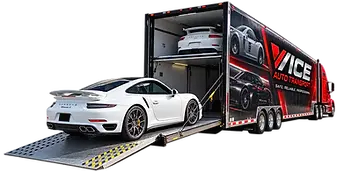
Enclosed transport places the vehicle inside a covered trailer.
It costs more and carrier availability is more limited, but it provides additional protection from weather, road grime, and airborne debris during transportation.
Enclosed transport can make sense for:
Classic and collector cars
Exotic vehicles
High-value luxury vehicles
Freshly restored cars
Very low-clearance vehicles
Specialty vehicles where additional protection is worth the cost
If you're relocating with a standard family SUV, open transport will usually be sufficient.
If you're moving a restored classic or specialty vehicle across the country, enclosed shipping may be worth the additional expense.
For a deeper comparison, read our guide on whether enclosed auto transport is worth it for your car.
Get an Accurate Quote for the Vehicle You're Actually Shipping
A useful auto transport quote begins with accurate information.
Provide:
Pickup and delivery ZIP codes
Vehicle year, make and model
Running condition
Preferred pickup window
Preferred delivery timing
Significant modifications
Anything affecting the vehicle's size or loading requirements
Tell your transport coordinator about oversized tires, lift kits, lowered suspension, roof racks, aftermarket bumpers, toolboxes, unusual ground clearance, or other modifications.
Those details can affect the trailer space and equipment required.
Be Specific About Inoperable Vehicles
If the vehicle doesn't run, simply describing it as "inoperable" doesn't provide enough information.
Does it start?
Does it roll?
Does it steer?
Do the brakes work?
A vehicle that doesn't start but rolls, steers, and brakes can often be loaded by a carrier equipped with a winch.
A vehicle with locked wheels, damaged steering, missing tires, or collision damage can require different equipment or additional loading assistance.
Accurate information helps match the shipment with a carrier capable of handling the vehicle.
What Does Door-to-Door Car Shipping Mean During a Move?
Door-to-door auto transport means the carrier attempts to pick up and deliver your vehicle as close to the requested addresses as safely and legally possible.
It doesn't mean a 75-foot commercial truck can enter every residential street.
Tight cul-de-sacs, narrow roads, low tree branches, gated communities, apartment complexes, steep hills, parked cars, and commercial-truck restrictions can prevent a carrier from reaching the exact address.
When that happens, you and the driver can arrange a nearby truck-friendly meeting point.
Large shopping centers, wide streets, truck stops, or other accessible commercial areas are commonly used.
This is normal and does not mean you've lost door-to-door service.
If you're planning pickup from a house, condo, or apartment, read Are Residential Pickups Allowed for Auto Transport? How Door-to-Door Car Shipping Really Works.
Planning this before moving day can be particularly helpful because the last thing you need while movers are carrying furniture out of the house is a car carrier discovering it can't get down your street.
Prepare Your Car Before the Carrier Arrives
Preparing a vehicle for transport doesn't take long, but it matters.
Remove unnecessary personal belongings, toll tags, parking passes, valuables, and loose accessories.
Some carriers may permit a limited amount of personal property at their discretion, but personal belongings generally aren't covered by the carrier's cargo insurance.
Additional weight can also create problems for the carrier.
The safest approach is to ship the vehicle without unnecessary personal property.
Before pickup:
Wash the exterior enough to make existing damage visible.
Take clear, dated photographs from every side.
Photograph the wheels, windshield, bumpers and existing damage.
Leave approximately one-quarter tank of fuel.
Make sure the battery is charged.
Check that the tires are properly inflated.
Disclose active fluid leaks or mechanical issues.
Have a working key available for the driver.
At pickup, the driver will inspect the vehicle and document its existing condition on the Bill of Lading.
Walk around the vehicle with the driver and make sure existing scratches, dents, chips, or other visible damage are recorded before signing.
Don't rush this part.
The pickup inspection establishes the vehicle's documented condition before transportation.
Understand Pickup Time vs. Transit Time
One of the easiest ways to misunderstand an auto transport estimate is to treat pickup timing and transit timing as the same thing.
They aren't.
The pickup window is the period during which the vehicle is expected to be collected.
Transit time begins once the carrier has actually loaded the vehicle and started moving it toward the destination.
Transit depends on distance, route, traffic, weather, other vehicles on the carrier, loading and unloading schedules, and federal hours-of-service requirements.
A shorter interstate relocation may take only a few days once loaded.
A coast-to-coast shipment commonly requires considerably longer and may take roughly a week or more after pickup, depending on the route and circumstances.
Those are planning ranges, not guarantees.
Build Some Cushion Into Your Relocation
Try not to schedule vehicle delivery immediately before something that absolutely requires the car.
If you start a new job Monday morning, planning around a Sunday-night vehicle delivery leaves almost no margin for a delay.
The same applies to a dealership trade-in, DMV appointment, college move-in, military reporting requirement, or another fixed event.
A little scheduling cushion makes the relocation substantially less stressful.
If you need expedited handling or have a hard deadline, tell your transport coordinator early.
Tighter scheduling can sometimes be arranged, but it may cost more and still depends on actual carrier availability.
A realistic plan is more valuable than a guarantee nobody can responsibly make.
What If You Leave the State Before Your Car Is Picked Up?
This happens frequently during relocations.
You don't necessarily have to remain behind with the vehicle.
A trusted adult can usually release the car to the carrier on your behalf.
That person should:
Have access to the vehicle and keys
Know the pickup arrangements
Be available by phone
Understand the vehicle's existing condition
Be able to participate in the pickup inspection
Sign the necessary paperwork
The same principle applies at the destination.
If you haven't arrived yet, another authorized adult may be able to receive the vehicle for you.
Coordinate this with your transport company beforehand rather than surprising the driver at delivery.
Moving Multiple Vehicles to Another State
Families relocating to another state sometimes need to transport two or more vehicles.
Tell your transport coordinator from the beginning.
Moving multiple vehicles doesn't necessarily mean they'll travel on the same truck, although that may sometimes be possible depending on the route, dates, equipment, and available trailer space.
The priority should be coordinating a practical transportation plan for all of the vehicles rather than assuming they'll automatically remain together throughout the trip.
Accurate information becomes even more important when pickups or deliveries involve different contacts or addresses.
Stay Reachable During Pickup and Delivery
Communication matters during a relocation because your schedule is probably changing at the same time the carrier's schedule is changing.
Keep your phone available as pickup approaches.
Make sure the pickup contact knows the plan and that someone authorized can release the vehicle if you cannot be present.
The carrier or your transport coordinator may call or text with updated timing as the truck gets closer.
At delivery, inspect the vehicle before signing the final condition report.
Compare its condition with your pickup photographs and the original Bill of Lading.
If you notice a new concern, document it on the paperwork before signing and take clear photographs while the carrier is still present.
Keep copies of the paperwork.
Most auto transport deliveries are straightforward, but proper documentation protects everyone if a question arises.
Why Live Support Matters When You're Relocating
Moving to another state already means coordinating movers, housing, travel, utilities, work schedules, family members, and dozens of other details.
Your car shipment shouldn't become another system you have to manage alone.
And relocation shipments don't always follow the original plan perfectly.
Your closing date changes.
Your flight gets moved.
The carrier can't enter the neighborhood.
Your pickup contact changes.
The truck arrives while you're already in another state.
Those are the moments when being able to reach an actual person matters.
Vice Auto Transport puts a strong emphasis on live support from dedicated auto transport professionals.
We're an auto transport broker, which means we coordinate your shipment with an independent motor carrier that fits the vehicle, route, equipment requirements, and available dates.
If something changes, you can call or text someone who understands the shipment and can help coordinate the next step.
Technology should make vehicle shipping easier.
It shouldn't leave you alone when your moving plans change.
Real reviews, real people answering the phones, we're here to help, no worries.
How to Arrange Car Shipping When Relocating to a New State Without Added Stress
The smoothest relocation shipments usually come down to three things:
Accurate vehicle information, realistic scheduling, and clear communication.
You should know who is coordinating the shipment, how pricing works, what happens if the pickup window changes, and who to contact while your vehicle is moving.
Whether you're relocating a family SUV from Florida to the Northeast, sending a pickup from Texas to California, moving a car from Chicago to Florida, or transporting a collector vehicle across the country, the fundamentals remain the same.
Plan early.
Provide accurate information.
Document the vehicle.
Leave some flexibility around pickup and delivery.
And choose a transport company based on its ability to actually coordinate the shipment rather than the cheapest promise in your inbox.
Ready to Ship Your Car to a New State?
Vice Auto Transport coordinates nationwide door-to-door vehicle shipping for relocations, online vehicle purchases, seasonal moves, military PCS moves, dealerships, and individual vehicle owners.
We'll help you build a realistic transportation plan around your vehicle, route, and moving schedule.
Call: 1-800-541-0696
Text: 754-800-4112
Vice Auto Transport — Let Us Handle the Miles.


Comments