

How Brokers Select Carriers for Your Car Shipment

A carrier accepting your vehicle is not the same thing as a carrier being the right fit for it. How brokers select carriers can affect pickup communication, the equipment used, the handling of a non-running car, and whether the driver is realistically positioned to move your vehicle on the route you need.
That is why a legitimate auto transport broker does more than post a shipment and take the first call. The goal is to match the vehicle, route, timing, and service type with a properly qualified carrier that has a practical reason to take the load. Sometimes that happens quickly. Other times, especially on a remote route or during a busy seasonal period, it takes more coordination.
How Brokers Select Carriers for Auto Transport
A broker arranges transportation with independent motor carriers. The carrier is the company operating the truck and physically moving the vehicle. A broker's job is to evaluate available options, communicate the details clearly, and help the customer avoid the common problem of booking based only on the lowest number.
Before assigning a shipment, a broker should verify that the carrier has active operating authority appropriate for vehicle transport and insurance information on file. Those are basic starting points, not the entire decision. Insurance coverage can vary, and a customer shipping a daily driver on an open trailer may have different needs than a collector shipping a restored classic in an enclosed trailer.
The shipment details also need to match what the carrier can actually handle. A standard operable sedan is straightforward. A lifted truck, low-clearance sports car, oversized SUV, motorcycle, auction vehicle with no keys, or non-running vehicle can require different equipment, winching capability, trailer space, or loading plans. If those details are not disclosed upfront, the driver may arrive unable to load the vehicle, or may need to renegotiate the price.
Route Fit Matters More Than a Random Truck Nearby
Customers often picture a carrier driving directly from Point A to Point B for one car. In most cases, auto transport works differently. A multi-car carrier builds a route with several pickups and deliveries. The best available truck is usually one whose current path, available space, and timing line up with your shipment.
That route fit matters. A carrier regularly moving between Florida and the Northeast may be a stronger match for a snowbird vehicle shipment than a truck that is technically available but has to make a major detour. The same goes for popular lanes such as California to Texas, the Midwest to Florida, or dealer and auction routes near major metro areas.
Remote pickup or delivery locations can be more complicated. Large transport trucks may not be able to enter narrow residential streets, tight apartment communities, rural roads, or certain auction lots. A good broker discusses this before dispatch, not when the truck is already at the gate. Often, the solution is a nearby wide street, shopping center, truck stop, or another safe meeting point that works for both the customer and driver.
Pricing Helps Attract the Right Carrier
The price quoted to a customer and the amount offered to a carrier are connected, but they are not identical. Carrier pay needs to make sense for the distance, vehicle size, fuel costs, route demand, loading difficulty, and available capacity. If an offer is too low for the market, qualified carriers may pass it by while a customer waits for a pickup that never becomes realistic.
This is one reason extremely cheap quotes can create problems. A low number may look appealing at first, but it may not be enough to attract a carrier on the actual route. Then the customer gets a call days later saying the price has to increase, or the shipment remains unassigned.
Higher pricing is not automatically better, either. A broker should be able to explain why a price is where it is. A short-notice move, enclosed transport, an inoperable vehicle, a difficult rural route, or a peak seasonal lane can legitimately cost more. On the other hand, an ordinary, flexible shipment on a high-volume route may have more carrier options and a more competitive range.
The honest answer is that pricing depends on the shipment. Realistic pricing gives a broker room to select from capable carriers rather than hoping someone accepts an offer that does not fit their route or operating costs.
Reviews and Track Record Are Useful, With Context
Carrier reviews can reveal patterns worth paying attention to. Repeated complaints about unreachable dispatch, missed communication, careless handling, or surprise issues are signals a broker should not ignore. Consistent positive feedback, long operating history, and familiarity with a route can be encouraging signs.
Still, reviews are one piece of the picture. Auto transport involves weather, traffic, mechanical issues, delivery scheduling, and multiple customers on a shared trailer. Even a reliable carrier can have an occasional difficult review. What matters is whether there is a pattern and whether the carrier communicates professionally when a problem occurs.
A broker may also consider prior experience with a carrier. If a carrier has handled similar vehicles, communicated clearly, and completed previous shipments responsibly, that firsthand experience has value. But familiarity should not override the actual needs of the current shipment. The right carrier for a dealer transfer may not be the right choice for an enclosed classic-car move.
Communication Before Dispatch Prevents Most Surprises
The best carrier match can still go wrong if the shipment information is incomplete. Before a vehicle is dispatched, the broker should confirm the pickup and delivery addresses, contact numbers, vehicle condition, operability, modifications, personal-item policy, timing needs, and any access limitations.
For auction buyers, this is especially important. Copart, IAA, Manheim, and other auction locations may have release rules, storage deadlines, lot hours, gate procedures, or vehicle-condition issues that affect pickup. A carrier needs the correct lot number, buyer identification details when required, and a clear understanding of whether the vehicle rolls, steers, brakes, and has keys.
At pickup, the driver typically performs a vehicle condition inspection and records existing damage on a bill of lading. Customers should be present when possible, take their own photos, and point out concerns before loading. At delivery, inspect the vehicle again before signing the final paperwork. This is not about expecting trouble. It is simply the right way to document a vehicle shipment.
Open or Enclosed Changes the Carrier Search
Open transport is the standard option for most cars, trucks, SUVs, and dealer inventory. It is generally more available and usually costs less because open carriers can move more vehicles at once. Your car is exposed to normal road and weather conditions, much like any vehicle being driven or transported on an open trailer.
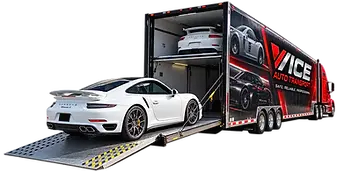
Enclosed transport is often a better fit for high-value, classic, exotic, luxury, or low-clearance vehicles. It adds protection from weather and road debris, but enclosed trucks are less common and typically cost more. The selection process may be narrower because the broker needs a carrier with enclosed equipment, suitable ramps or lift-gate capability when needed, and space on the correct route.
There is no one-size-fits-all answer. A well-kept daily driver may travel perfectly well on an open carrier. A recently restored classic or a low-slung performance car may justify the additional cost of enclosed service. The important part is making that decision based on the vehicle and your comfort level, not on a generic upsell.
What You Should Ask Your Broker
You do not need to become an auto transport expert before shipping a car, but a few direct questions can help you understand how your shipment is being handled. Ask whether the carrier's authority and insurance are being checked, whether the price is realistic for the route, and whether your vehicle has any details that require special equipment.
You can also ask how the broker will communicate once a carrier is assigned. A good answer should be specific: you should know who is coordinating the shipment, what information will be shared when a truck is assigned, and what to do if pickup or delivery access changes.
Be cautious with anyone who promises an exact pickup time before a carrier is assigned or treats a quote like a guaranteed final number without asking about the vehicle. Real transport coordination requires real details. Flexibility usually creates more options, but your broker should be upfront if your schedule, location, or vehicle requires a tighter plan.
At Vice Auto Transport, the point is not to rush a vehicle onto the first available truck. It is to make a practical match, keep you informed, and help you understand the decisions behind the shipment. Let Vice Auto Transport handle the miles while you keep the important details in view.


Comments