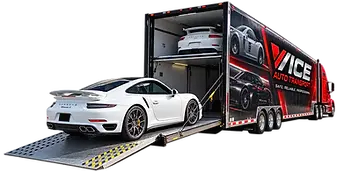


How Does Vice Auto Transport Vet and Choose Car Carriers

How Does Vice Auto Transport Vet and Choose Carriers? Our Carrier Screening Process Explained
A low car shipping quote doesn't mean much if the truck that accepts your shipment is uninsured, poorly equipped, unreliable, or difficult to reach when pickup day arrives.
One of the most common questions customers ask about auto transport brokers is simple:
How do you actually choose which carrier transports my vehicle?
It's a fair question.
Most auto transport brokers don't own the trucks that physically move customers' vehicles. Instead, they coordinate transportation with independent motor carriers operating across the country.
But there's a significant difference between simply posting a vehicle on a load board and taking the first available offer, and actually reviewing the carrier before assigning a shipment.
At Vice Auto Transport, operated by Vice One Logistics LLC, carrier selection involves more than checking whether a company has a truck available.
We review operating authority, insurance information, safety and inspection records, carrier feedback, communication history, equipment suitability, and shipment requirements.
We also request additional verification materials, including photos or videos of transportation equipment and driver identification, when appropriate.
Our goal is to match each vehicle with a qualified, appropriately equipped carrier that makes sense for the route.
No screening process can eliminate every transportation risk, but careful carrier selection can help identify problems before a vehicle is loaded.
Here's a closer look at how we approach it.
What Does an Auto Transport Broker Actually Do?
An auto transport broker helps arrange vehicle transportation between a customer and an independent motor carrier.
The broker coordinates the shipment, reviews transportation requirements, evaluates carrier options, and helps manage communication between the parties.
The carrier is the company that physically transports the vehicle.
This distinction matters because not every broker operates the same way.
Some companies focus primarily on generating leads and getting customers to book.
Others take a more involved approach to carrier selection, transportation equipment, dispatch coordination, and customer communication.
At Vice Auto Transport, we believe a broker's value should extend beyond simply finding the lowest available truck.
A carrier must be suitable for the vehicle, route, and customer's actual transportation requirements.
That means asking questions and verifying information before committing a shipment to a particular carrier.
Step 1: Verify the Carrier's USDOT Number and Operating Authority
Before considering an independent motor carrier for a shipment, we review its operating credentials.
Carriers performing interstate for-hire vehicle transportation generally need appropriate federal operating authority and USDOT registration.
Two important identifiers are:
USDOT Number: Used to identify and track a motor carrier's federal safety information.
MC Number: A commonly used identifier associated with interstate operating authority, where applicable.
These identifiers help us research the company and determine whether its operating credentials are consistent with the transportation services being offered.
Checking FMCSA Records
One of the resources we use is the Federal Motor Carrier Safety Administration (FMCSA).
The FMCSA maintains public information about motor carriers, including registration, operating authority, safety data, and inspection history.
We review available records to help confirm that the carrier is authorized for the work it proposes to perform.
Customers can also research motor carriers independently through the following resources:
A carrier appearing on a load board does not automatically mean its credentials are current or appropriate.
We want to know who we're dealing with before assigning a customer's vehicle.
Confirming the Carrier's Identity
We also pay attention to whether the company communicating with us matches the carrier whose authority is being used.
A dispatcher's name, email address, or phone number by itself isn't sufficient proof that the person is authorized to represent a particular trucking company.
When necessary, we perform additional checks to confirm the relationship between the dispatcher, carrier, and operating authority.
This is particularly important because transportation fraud can involve people misrepresenting legitimate carrier businesses.
Step 2: Verify Cargo Insurance and Liability Coverage
Insurance is one of the most important parts of carrier screening.
We review carrier insurance information to help determine whether appropriate coverage is in place for the proposed shipment.
That includes looking at relevant cargo insurance information and liability coverage.
However, simply seeing that a carrier has insurance isn't the end of the process.
Why Cargo Insurance Limits Matter
Different vehicles create different exposure levels.
For example, transporting an everyday Honda Accord is not the same as transporting a restored 1967 Shelby Mustang or a high-value exotic vehicle.
A carrier may have active cargo insurance but still have policy limits or exclusions that require closer attention.
Depending on the vehicle and shipment, important considerations include:
Cargo insurance limits
Per-vehicle or per-occurrence limitations
Applicable deductibles
Relevant exclusions
Type of equipment being used
Whether the proposed transportation is consistent with the coverage
For especially valuable vehicles, we take a closer look at whether the available coverage is appropriate for the transportation being arranged.
An insurance certificate alone does not guarantee that every possible loss will be covered.
Actual protection depends on the applicable policy, legal liability, and circumstances of a claim.
Open vs. Enclosed Transport Insurance Considerations
Open transportation is commonly used for everyday passenger vehicles, SUVs, and pickup trucks.
Enclosed transportation is frequently requested for classic cars, exotics, luxury automobiles, and valuable collector vehicles.
The carrier's insurance information should be evaluated in relation to the type and value of the vehicle being transported.
Customers should not assume that enclosed transportation automatically means unlimited or full-value insurance coverage.
For more information, read our guide on whether enclosed car shipping is worth the additional cost.
Shipping a classic, exotic, or specialty vehicle?
Request a quote from Vice Auto Transport and let us know the vehicle's approximate value and any special loading requirements.
Step 3: Review Carrier Ratings, Reviews and Performance History
One of the biggest advantages of working with established transportation networks is access to information about carrier performance.
Platforms such as SuperDispatch, Central Dispatch, and other industry systems may provide ratings, reviews, transaction history, or carrier feedback that brokers can use when evaluating transportation options.
At Vice Auto Transport, we consider this information alongside official records and direct communication.
What Do We Look for in Carrier Reviews?
We pay particular attention to patterns involving:
Last-minute cancellations
Failure to complete accepted shipments
Repeated pickup or delivery problems
Reports of vehicle damage
Poor communication
Difficulty reaching dispatchers or drivers
Inaccurate transportation information
Unprofessional handling of customer issues
A carrier with a history of accepting loads and repeatedly canceling at the last minute may create unnecessary problems for customers.
Likewise, repeated reports of damage, unexplained delays, or poor communication deserve closer examination.
Why Patterns Matter More Than One Bad Review
No transportation company is perfect.
A delayed shipment or negative review does not automatically mean a carrier should never be used.
Traffic, weather, mechanical problems, and other unforeseen issues can affect even experienced operators.
We look for repeated patterns, the seriousness of reported incidents, and how the carrier responds when something goes wrong.
For example, a carrier experiencing one weather-related delay is different from a carrier repeatedly accepting shipments and failing to show up.
Similarly, one disputed damage complaint is not the same as a consistent pattern of reported vehicle damage.
The goal is to make an informed assessment rather than relying on a single rating or review.
Do Brokers Have Access to Reviews Customers Cannot See?
Some transportation platforms provide industry-specific carrier feedback that isn't presented like ordinary public Google reviews.
This information can help brokers assess how a carrier has performed on previous shipments.
However, reviews and ratings are only one part of the process.
They should be considered alongside current authority, insurance, safety information, equipment suitability, and direct communication.
A five-star rating does not replace proper carrier verification.
Step 4: Check FMCSA Driving, Safety and Inspection Records
In addition to registration and operating authority, we review available safety and inspection information.
The FMCSA maintains records that can help identify certain safety concerns and enforcement history.
Depending on available information, we may examine:
Roadside inspection results
Out-of-service information
Available crash history
Safety ratings, when assigned
Federal safety and enforcement records
Patterns of vehicle or driver-related violations
These records can provide another perspective on a carrier's operating history.
Why Inspection Records Matter
Commercial trucks are subject to safety inspections.
Inspection records may reveal issues involving vehicle maintenance, braking systems, tires, lighting, driver qualifications, or other safety-related requirements.
Not every inspection violation carries the same significance.
We consider the nature, frequency, and seriousness of available findings rather than treating every recorded issue as equivalent.
Do FMCSA Records Tell the Whole Story?
No.
Public safety records are useful, but they have limitations.
A newer or smaller carrier may have relatively little inspection history.
A carrier's available data may also be incomplete or require context.
And a lack of recorded violations does not prove that a carrier will never experience a problem.
That's why we combine official records with insurance verification, performance feedback, equipment checks, and direct communication.
We don't believe one database should make the entire decision.
Step 5: Request Photos and Videos of Carrier Equipment
This is another important part of our carrier verification process.
Vice Auto Transport may request photographs or videos of the truck, trailer, and other transportation equipment before assigning a shipment.
Why?
Because saying you have the right equipment and actually having it are two different things.
What Equipment Information Do We Look For?
Depending on the vehicle and transportation requirements, we may request photos or videos showing:
The transport truck
The trailer
Loading ramps
Winches
Hydraulic liftgates
Vehicle securement equipment
Trailer configuration
Equipment dimensions or clearances
Other specialty loading arrangements
These materials can help us assess whether the equipment being offered is consistent with the carrier's description and the vehicle's needs.
Photos and videos are an additional verification tool, not a substitute for current insurance, operating authority, or appropriate equipment specifications.
Why This Matters for Non-Running Vehicles
Imagine a customer purchases a non-running Chevrolet Camaro from an auction.
The vehicle won't start, but it rolls and steers.
The carrier needs suitable equipment to load it safely, potentially including a winch.
If the carrier arrives without the necessary equipment, pickup may fail.
That can create storage charges, scheduling problems, and additional transportation costs.
Confirming the loading requirements and equipment beforehand helps reduce those risks.
Why This Matters for Lifted Trucks and Oversized Vehicles
A stock Toyota Camry and a lifted Ford F-350 dually do not have the same transportation requirements.
Oversized trucks may require additional trailer space, specialized equipment, or alternative loading arrangements.
We evaluate factors such as:
Height
Width
Length
Weight
Tire size
Lift kits
Wheelbase
Available trailer clearance
Depending on the shipment, photographs of the trailer and loading setup can help us assess whether the carrier is a realistic match.
Why This Matters for Classic and Exotic Cars
Specialty vehicles can have their own loading challenges.
A lowered Porsche, classic Corvette, or valuable restored Mustang may require a particular ramp angle or liftgate arrangement.
Not every enclosed trailer has a hydraulic liftgate, and not every ramp setup is suitable for every low-clearance vehicle.
We want the carrier to understand the vehicle's requirements before arriving at pickup.
Read our guide on how to ship a classic car interstate or cross-country.
Step 6: Request Driver Identification and Verify Pickup Details
Carrier identity verification is another important consideration.
When appropriate, we request driver identification, including a driver's license, and verify relevant driver and carrier details before pickup.
This helps us establish who is expected to collect the vehicle and whether the driver information is consistent with the assigned carrier.
Why Driver Identification Matters
The individual arriving to collect a vehicle should be associated with the motor carrier assigned to the shipment.
This is particularly important when a vehicle is being collected from:
An auction facility
A dealership
A private seller
A vehicle storage yard
A commercial fleet location
A high-value collector car facility
We may confirm identifying information with the carrier or dispatcher and coordinate the details with the pickup location.
Driver identification documents are handled as sensitive verification information and are not intended for public disclosure.
A driver's license alone does not establish motor carrier authority or prove that a driver is authorized to operate under a particular company's credentials.
It is one component of a broader verification process.
Preventing Unauthorized Vehicle Pickup
Transport fraud can involve someone attempting to collect a shipment while claiming to represent a legitimate carrier.
For this reason, it's important to verify the carrier assigned to the vehicle and communicate the correct pickup details to the releasing party.
Depending on the situation, relevant checks may include confirming:
The assigned motor carrier
Driver identification
Dispatcher contact information
Carrier operating authority
Pickup authorization
Vehicle identification
The expected truck or trailer
When a shipment raises concerns, we may request additional information or decline to proceed until the discrepancy is resolved.
The objective is to reduce opportunities for misidentification, unauthorized pickup, and avoidable confusion.
Step 7: Make Sure the Equipment Matches the Vehicle
Even a properly licensed and insured carrier may not be suitable for every shipment.
Trailer configuration matters.
Standard Open Auto Transport
Open carriers are commonly used for:
Sedans
SUVs
Crossovers
Pickup trucks
Everyday passenger vehicles
Open transportation is usually the most available and economical choice for standard vehicles.
However, vehicle size, weight, and loading clearance still matter.
Enclosed Auto Transport
Enclosed carriers are frequently selected for:
Classic cars
Exotic vehicles
Collector automobiles
High-value luxury cars
Freshly restored vehicles
Certain low-clearance sports cars
The carrier's interior dimensions, loading system, securement equipment, and insurance arrangements should be appropriate for the vehicle.
Flatbed, Hotshot and Specialized Transport
Some vehicles require equipment beyond conventional auto transport trailers.
Examples include:
High-roof cargo vans
Oversized pickup trucks
Certain commercial vehicles
Modified or heavily lifted trucks
Unusually tall or heavy vehicles
Specialized equipment and vehicle bodies
Flatbed, hotshot, step-deck, or other commercial transportation equipment may be appropriate depending on the actual dimensions and weight.
For full-size high-roof cargo vans, conventional enclosed auto trailers are generally impractical because of space constraints. A suitable Conestoga-style trailer may be a rare exception, but open or specialized commercial equipment is normally the realistic option.
The carrier has to fit the vehicle, not the other way around.
If you're shipping a larger or modified vehicle, request a quote with the exact dimensions and photos.
Step 8: Evaluate Carrier Communication Before Dispatch
Communication is a surprisingly useful part of assessing a carrier.
Before assigning a shipment, we pay attention to how the carrier or dispatcher communicates.
Questions we consider include:
Do they answer calls or respond to messages?
Do they understand the pickup and delivery requirements?
Can they explain their equipment and loading capabilities?
Are they realistic about timing?
Do they provide requested verification information?
Do they ask relevant questions about the vehicle?
Are they clear about the payment and transportation terms?
A carrier that is difficult to reach before pickup may become even harder to communicate with once the vehicle is loaded.
That doesn't mean a delayed response automatically disqualifies someone.
Drivers are often operating their equipment and may not be immediately available.
However, repeated communication problems or inconsistent information can raise concerns.
Why We Don't Ignore Red Flags
If a carrier gives conflicting information about its equipment, refuses reasonable verification requests, or cannot explain who will be collecting the vehicle, we may decide that the shipment is not a good match.
An available truck isn't always the right truck.
Sometimes passing on a questionable option is better than rushing a dispatch and dealing with preventable problems later.
Step 9: Check Whether the Carrier's Route Actually Makes Sense
A carrier can have appropriate authority, insurance, equipment, and good reviews but still be a poor fit for a specific route.
Auto transport drivers generally coordinate multiple vehicles along a planned path.
Their decisions depend on:
Pickup location
Delivery location
Available trailer space
Other scheduled vehicles
Vehicle size and weight
Fuel and operating costs
Pickup timing
Route profitability
Weather and traffic
A carrier traveling from Florida to New York may be a strong option for a vehicle moving between major cities along that route.
But a vehicle located far outside the carrier's planned path may not be as attractive.
Why Rural Locations Can Be Harder to Service
A pickup location far from a major interstate may require substantial additional driving.
Depending on the route, a carrier may need additional compensation to make the stop worthwhile.
This doesn't necessarily reflect the quality of the carrier or broker.
It's part of the economics of operating a large truck.
Read our article on why some car shipping routes are harder and more expensive than others.
Why Realistic Pricing Matters
Some customers understandably choose the lowest quote they receive.
However, an unrealistically low price may not attract a qualified carrier within the requested pickup window.
The broker may then have difficulty assigning the shipment or request an adjustment later.
Our objective is to evaluate a price that makes sense for the vehicle, route, timing, and available transportation equipment.
Paying more does not automatically guarantee better service, but an unrealistically low carrier rate can create unnecessary dispatch problems.
Read our guide on how to avoid car shipping price increases after booking.
Diesel costs also play a role in carrier pricing. Learn more about how rising diesel prices affect auto transport.
Step 10: Confirm Pickup and Delivery Requirements
Carrier screening isn't complete if the driver doesn't have the information needed to perform the shipment.
Before dispatch, we work to confirm relevant details such as:
Pickup and delivery addresses
Contact names and phone numbers
Vehicle year, make, and model
Vehicle condition
Keys and access instructions
Operating hours
Auction release information
Loading requirements
Special equipment needs
Pickup and delivery restrictions
Residential Pickup and Delivery
A large multi-car trailer may not be able to enter certain residential neighborhoods.
Narrow streets, low branches, tight turns, and local restrictions can create access problems.
In those situations, a nearby truck-friendly meeting location may be necessary.
See our guide on residential auto transport pickups.
Auction and Dealership Shipments
Vehicles purchased from Copart, IAA, Manheim, and dealerships may require release authorization, buyer information, lot numbers, or other documentation.
The carrier needs to understand these requirements before arriving.
A vehicle that isn't released or cannot be loaded as described may lead to delays, storage charges, or additional transportation expenses.
Pickup and Delivery Communication
Once a carrier is assigned, the customer should receive the relevant carrier information and updated pickup expectations.
Drivers may have several other vehicles on their route, so pickup and delivery times are often estimated windows rather than exact appointments.
Weather, traffic, mechanical issues, earlier customer delays, and loading problems can affect scheduling.
We believe customers deserve clear communication when these situations occur.
What Happens If a Carrier Doesn't Meet Our Requirements?
Sometimes the right decision is to decline an available carrier.
That may happen because:
Operating authority or insurance information raises concerns
Carrier identification cannot be satisfactorily verified
The equipment is unsuitable
Loading requirements cannot be met
Safety information warrants further review
Carrier feedback reveals concerning patterns
Communication is inconsistent
The proposed route or schedule is unrealistic
The carrier cannot provide necessary shipment details
Passing on a carrier can mean waiting for another option.
That can be frustrating when a customer wants their vehicle picked up immediately.
However, assigning the wrong carrier simply to make a shipment appear dispatched can create larger problems later.
Availability alone isn't enough. The carrier has to be a reasonable fit for the job.
Can a Broker Guarantee That a Carrier Will Never Have a Problem?
No.
Even after reviewing authority, insurance, safety information, equipment, feedback, and driver details, unexpected problems can still happen.
A truck can break down.
Weather can disrupt a route.
Traffic can delay delivery.
A driver can experience an issue at an earlier pickup.
And vehicle damage, while not inevitable, remains a risk associated with transportation.
Carrier screening is intended to improve decision-making and help identify avoidable problems.
It is not a guarantee that every shipment will be completed without a delay, claim, or other complication.
What matters is selecting suitable carriers, communicating clearly, documenting the shipment, and responding when problems arise.
What Can Customers Do to Help Ensure a Smooth Shipment?
Good carrier selection starts with accurate vehicle information.
Before booking, tell your transport coordinator about:
Vehicle modifications
Non-running condition
Low ground clearance
Oversized tires
Additional equipment
Mechanical problems
Difficult pickup locations
Auction release deadlines
Strict scheduling requirements
The more accurate the information, the better we can evaluate carrier and equipment suitability.
Inspect Your Vehicle at Pickup and Delivery
Regardless of the carrier selected, vehicle condition documentation is important.
At pickup:
1. Photograph the vehicle from multiple angles.
2. Review the driver's condition inspection.
3. Make sure existing damage is recorded.
4. Review the Bill of Lading before signing.
At delivery:
1. Inspect the vehicle carefully.
2. Compare its condition with your pickup photos.
3. Document any new damage immediately.
4. Note concerns on the delivery paperwork before the driver leaves.
These steps help create a clearer record if an insurance or damage claim becomes necessary.
Why Choose Vice Auto Transport?
Vice Auto Transport has been helping customers arrange vehicle transportation since 2018, with experience in the industry dating back further.
We coordinate nationwide open, enclosed, and specialized vehicle transportation with independent motor carriers.
Our carrier selection process goes beyond simply finding an available truck.
Depending on the shipment, we review:
Federal operating authority and USDOT information
Cargo and liability insurance information
Available FMCSA safety and inspection records
Carrier ratings and industry feedback
Cancellation, damage, and communication history
Truck and trailer photos or videos
Driver identification and pickup authorization
Equipment compatibility
Route suitability
Pickup and delivery requirements
We also consider our experience working with carriers and the quality of communication before and during dispatch.
Not every review requires every possible document or verification step, and no check eliminates every risk.
But we believe customers deserve to know that carrier selection involves more than clicking the first available name on a screen.
Real reviews, real people answering the phones, and a team that's here to help. No worries.
Get a Quote From Vice Auto Transport
Whether you're shipping a daily driver, classic car, luxury vehicle, pickup truck, SUV, or commercial vehicle, we can help coordinate transportation with an appropriately equipped independent carrier.
To get started, provide:
Pickup and delivery ZIP codes
Vehicle year, make, and model
Running condition
Open or enclosed transport preference, where applicable
Relevant modifications
Preferred pickup dates
Special loading requirements
Request your free car shipping quote:
https://www.viceautotransport.com/request-quote
Call: 1-800-541-0696
Text: 754-800-4112
Have questions about the carrier selection process? Reach out and we'll be happy to explain how it works.
Vice Auto Transport — Let Us Handle the Miles.


Comments