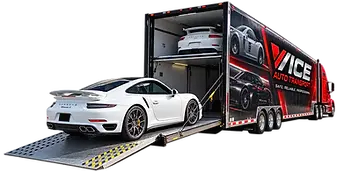


Car Shipping Guide: Seattle and Portland to East Coast

Seattle and Portland to East Coast Car Shipping: A Complete Guide in Both Directions
Shipping a car between the Pacific Northwest and the East Coast is a major interstate move, whether you're relocating from Seattle to New Jersey, purchasing a vehicle in Pennsylvania for delivery to Portland, or sending a car from Massachusetts to Washington.
These cross-country routes connect two very different parts of the country, often covering approximately 2,700 to more than 3,200 road miles depending on the exact pickup and delivery locations.
For most customers, arranging professional vehicle transportation is more practical than driving across the country, paying for fuel and hotels, and adding thousands of miles to the odometer.
But shipping a vehicle between Seattle, Portland, and East Coast destinations isn't as simple as selecting two cities and expecting a truck to appear the next morning.
Carrier availability, pricing, weather, vehicle condition, pickup access, and scheduling all influence the shipment.
And one important detail is frequently overlooked: shipping from Seattle to New York may have different pricing and availability than shipping from New York to Seattle.
This guide explains how to arrange car shipping in both directions between the Pacific Northwest and major East Coast destinations, including Pennsylvania, New Jersey, Connecticut, New York, Maryland, Massachusetts, and Virginia.
How Car Shipping Between the Pacific Northwest and East Coast Works
Most long-distance vehicle shipments are transported on multi-car trailers operated by independent motor carriers.
A carrier may collect vehicles around Seattle, Tacoma, Bellevue, Everett, Portland, Beaverton, Vancouver, Washington, or nearby communities before beginning its cross-country route.
On the East Coast, pickup and delivery markets include New York City, northern New Jersey, Philadelphia, Baltimore, Washington, DC, Boston, Richmond, and surrounding metropolitan areas.
The process works in either direction.
A customer moving from Portland to Philadelphia needs many of the same services as someone purchasing a car in Philadelphia and having it delivered to Portland.
The Role of an Auto Transport Broker
An auto transport broker coordinates the shipment with an independent motor carrier.
The broker reviews:
Pickup and delivery ZIP codes
Vehicle year, make, and model
Running condition
Vehicle dimensions and modifications
Preferred pickup dates
Open or enclosed trailer requirements
Carrier availability and compensation
The goal is to identify a suitable carrier with appropriate equipment, operating authority, and insurance information.
A quoted shipment isn't the same as a confirmed carrier assignment.
The carrier must accept the shipment before pickup can be scheduled with greater certainty.
At Vice Auto Transport, we focus on realistic carrier coordination rather than treating every cross-country move as an identical shipment.
Popular Seattle and Portland Car Shipping Routes to the East Coast
The Pacific Northwest connects with several major East Coast transportation markets.
While Seattle and Portland are significant origin and destination points, nearby suburbs and surrounding communities can also be accommodated.
Seattle and Portland to Pennsylvania
Pennsylvania is an important destination for relocations, vehicle purchases, dealerships, and specialty vehicle transportation.
Common route examples include:
Seattle to Philadelphia
Portland to Pittsburgh
Tacoma to Allentown
Bellevue to Harrisburg
Everett to King of Prussia
The reverse routes are equally relevant.
A vehicle purchased in Philadelphia, Pittsburgh, or Allentown can be transported to Seattle, Tacoma, Portland, or surrounding Pacific Northwest communities.
Carrier availability depends on the exact ZIP codes and existing truck routes.
Seattle and Portland to New Jersey
New Jersey is a significant vehicle transportation market because of its population density, dealerships, ports, and proximity to New York City.
Examples include:
Seattle to Newark
Portland to Jersey City
Bellevue to Edison
Tacoma to Cherry Hill
Beaverton to Princeton
Customers also frequently arrange transportation from New Jersey to Washington and Oregon.
A vehicle leaving northern New Jersey for Seattle may have different carrier options from one leaving southern New Jersey for a rural Oregon destination.
Seattle and Portland to New York
New York shipments may involve New York City, Long Island, Westchester County, Albany, Buffalo, or other parts of the state.
Popular route examples include:
Seattle to Brooklyn
Portland to Queens
Tacoma to Long Island
Bellevue to White Plains
Portland to Albany
The same routes can be arranged westbound.
For example, someone relocating from Long Island to Seattle may need a different pickup plan than a customer shipping from an upstate New York dealership to Portland.
Dense city streets and parking restrictions can make a nearby truck-friendly meeting point necessary.
Seattle and Portland to Connecticut
Connecticut is a common destination for residential relocations, dealership purchases, and collector vehicle shipments.
Examples include:
Seattle to Stamford
Portland to Hartford
Bellevue to Greenwich
Tacoma to New Haven
Beaverton to Norwalk
Connecticut-to-Pacific Northwest shipments are also available.
For high-value vehicles traveling between Connecticut and Washington or Oregon, enclosed transportation may be worth considering.
Seattle and Portland to Maryland
Maryland connects the Pacific Northwest with the Baltimore metropolitan area, Washington, DC suburbs, and surrounding Mid-Atlantic communities.
Examples include:
Seattle to Baltimore
Portland to Rockville
Tacoma to Bethesda
Bellevue to Columbia
Vancouver, Washington to Annapolis
The reverse direction is equally important for military relocations, employment moves, and out-of-state vehicle purchases.
Pickup and delivery access can vary significantly between suburban locations and dense urban neighborhoods.
Seattle and Portland to Massachusetts
Massachusetts is another major destination for cross-country vehicle transportation.
Popular route examples include:
Seattle to Boston
Portland to Cambridge
Tacoma to Worcester
Bellevue to Newton
Beaverton to Springfield
Massachusetts-to-Seattle and Massachusetts-to-Portland shipments may involve students, relocating families, dealership purchases, and seasonal moves.
Winter weather in New England can affect carrier scheduling, particularly when severe storms disrupt highways or earlier deliveries.
Seattle and Portland to Virginia
Virginia is a major destination for residential relocations, military moves, dealership transfers, and vehicle purchases.
Examples include:
Seattle to Richmond
Portland to Arlington
Tacoma to Alexandria
Bellevue to Virginia Beach
Hillsboro to Fairfax
Vehicles can also be shipped from Virginia to Seattle, Portland, and other Pacific Northwest destinations.
Northern Virginia deliveries may involve significant traffic and restricted residential access, while more rural parts of the state can require additional carrier coordination.
Shipping From the East Coast to Seattle or Portland
Although many customers search for car shipping from Seattle or Portland to the East Coast, the reverse direction deserves equal consideration.
Vehicles regularly move from Pennsylvania, New Jersey, Connecticut, New York, Maryland, Massachusetts, and Virginia to Washington and Oregon.
Common reasons include:
Relocating for employment
Military permanent change of station moves
Purchasing vehicles from out-of-state dealerships
College and university moves
Family relocations
Collector vehicle purchases
Returning to the Pacific Northwest after living on the East Coast
Does the Direction Affect the Shipping Price?
It can.
Auto transport rates are influenced by how many vehicles need transportation in a particular direction compared with the number of available carriers.
A truck traveling from New Jersey to Seattle may have different load opportunities than one traveling from Seattle to New Jersey.
Carriers also consider the availability of paying freight for subsequent trips.
That means a westbound shipment and an eastbound shipment can have different prices even when the mileage is similar.
For accurate pricing, request a quote for the actual direction of travel rather than assuming the reverse route will cost the same.
What Affects Seattle and Portland to East Coast Car Shipping Prices?
Distance is a major factor, but it isn't the only one.
A standard sedan moving from Portland to Philadelphia may be easier to accommodate than a lifted pickup traveling from a rural Washington community to a restricted residential location in Connecticut.
The final rate depends on several factors.
Exact Pickup and Delivery Locations
Major metropolitan areas generally provide more opportunities for carriers to combine loads efficiently.
However, the exact location still matters.
A pickup in central Seattle may require different arrangements from one in Tacoma or Bellevue.
Likewise, a delivery in northern New Jersey may be easier to coordinate than a remote destination in western Pennsylvania.
Vehicle Size and Condition
Larger and heavier vehicles occupy more trailer capacity.
Oversized SUVs, heavy-duty pickups, lifted trucks, and modified vehicles may require additional space or specialized equipment.
If the vehicle doesn't run, disclose that before booking.
A non-running vehicle that rolls, steers, and brakes may be manageable with a winch-equipped carrier.
Vehicles with locked wheels, damaged steering, or other mechanical problems can require more specialized arrangements.
Seasonal Carrier Demand
Seasonal demand can affect both directions.
Summer relocations, college moves, winter weather, holidays, and changes in carrier capacity can all influence pricing.
Fuel expenses also affect long-distance transportation costs.
Read our guide on how rising diesel prices affect auto transport for more information.
Pickup Flexibility
A vehicle available for pickup across several days may be easier to coordinate than one requiring collection on a specific date.
Carriers must balance multiple pickups, deliveries, driving hours, and route commitments.
A narrow pickup window can limit available options or require more competitive carrier compensation.
Why the Cheapest Cross-Country Car Shipping Quote Can Be Misleading
An unusually low quote may look attractive, especially when you're already managing the expenses of a cross-country move.
However, a quoted price doesn't guarantee that a carrier will accept the shipment.
If the amount offered to the carrier is significantly below what available drivers are willing to accept, the vehicle may remain unassigned.
That can lead to delays, requests for additional money, or repeated scheduling changes.
The highest quote isn't automatically the best either.
A realistic quote should reflect the vehicle, route, trailer type, current carrier availability, and requested timing.
Before booking, ask how carrier assignment works and what happens if the original quoted amount doesn't attract an available carrier.
For additional guidance, read How to Avoid Car Shipping Scams Before You Book.
Open vs. Enclosed Transport Between Seattle, Portland, and the East Coast
Both open and enclosed transportation can be arranged for cross-country vehicle shipments.
The right option depends on the vehicle's value, condition, and the level of protection desired.
Open Auto Transport
Open transport is the standard choice for most everyday vehicles.
It's commonly used for:
Family sedans
SUVs
Pickup trucks
Leased vehicles
Dealership purchases
Standard relocation vehicles
Open carriers are generally more common and less expensive than enclosed carriers.
The vehicle is secured on an open trailer and exposed to normal road conditions during transit.
For a standard family SUV moving from Portland to Virginia, open transportation is usually a practical choice.
Enclosed Auto Transport
Enclosed transportation places the vehicle inside a covered trailer.
It provides additional protection from weather, road spray, and airborne debris.
It's often preferred for:
Classic cars
Collector vehicles
Exotic cars
High-value luxury vehicles
Restored vehicles
Certain low-clearance sports cars
For example, a collector car moving from Seattle to a Connecticut automotive event may justify enclosed transportation.
Likewise, a specialty vehicle purchased in Massachusetts and shipped to Portland may benefit from the added protection.
Some enclosed carriers offer liftgate loading or specialized securement equipment, but trailer configurations vary.
Enclosed transportation generally costs more and may have fewer available carrier options.
Our article on whether enclosed auto transport is worth it explains the differences.
How Long Does Car Shipping Between the Pacific Northwest and East Coast Take?
Cross-country vehicle transportation is measured in days rather than hours.
Once loaded, shipments between Seattle or Portland and major East Coast destinations often take approximately seven to fourteen days.
The actual timeframe depends on:
Pickup and delivery locations
Carrier routing
Other scheduled stops
Traffic
Weather
Road restrictions
Federally regulated driving hours
Equipment and operating conditions
These are planning estimates, not guaranteed delivery dates.
Pickup Scheduling Is Separate From Transit Time
One of the most common misunderstandings in auto transport is confusing the pickup window with the delivery estimate.
A vehicle may be available for shipment today without having a carrier assigned today.
Once a carrier accepts the shipment, pickup and delivery expectations can be discussed more specifically.
If you have a strict deadline, tell your transport coordinator before booking.
Our article on what guaranteed pickup means for auto transport explains why customers should understand the actual terms behind scheduling promises.
Weather Considerations for Cross-Country Car Shipping
A shipment between Washington or Oregon and the East Coast can encounter very different weather conditions along the way.
Pacific Northwest Conditions
Seattle and Portland pickups may be affected by:
Heavy rain
Snow or ice
Mountain weather
High winds
Temporary highway restrictions
A storm doesn't have to occur at your pickup address to delay a truck.
Weather affecting the carrier's previous stops can change its arrival schedule.
Midwest and Mountain Weather
Depending on the carrier's routing, cross-country shipments may pass through mountain states, the Midwest, or other regions where winter storms and high winds affect travel.
Carriers may need to adjust routes or wait for safer conditions.
East Coast Winter Conditions
Destinations in Massachusetts, Connecticut, New York, New Jersey, and Pennsylvania can experience significant winter weather.
Maryland and Virginia can also experience snow, ice, and weather-related road disruptions.
Plan additional flexibility during severe weather periods rather than relying on a single exact arrival date.
Door-to-Door Pickup and Delivery: What Customers Should Expect
Door-to-door auto transport generally means the carrier gets as close to your requested addresses as safely and legally possible.
It doesn't guarantee that a large multi-car trailer can enter every driveway or residential street.
Seattle and Portland Pickup Challenges
Some Pacific Northwest neighborhoods have:
Steep residential streets
Tight turns
Low tree branches
Limited parking
Apartment access restrictions
Narrow driveways
A nearby truck-friendly meeting point may be necessary.
East Coast Delivery Challenges
Similar issues occur in:
New York City neighborhoods
Boston residential streets
Northern New Jersey communities
Philadelphia urban areas
Baltimore neighborhoods
Washington, DC suburbs
Historic or densely developed communities in Connecticut and Virginia
If the carrier cannot safely access the exact address, the driver may arrange a nearby meeting point.
This is normal and helps prevent unnecessary loading risks.
Learn more in Are Residential Pickups Allowed for Auto Transport?.
Preparing Your Vehicle for a Cross-Country Shipment
Proper preparation helps make pickup and delivery smoother.
Before the carrier arrives:
Wash the vehicle enough to inspect its condition.
Take clear photographs from multiple angles.
Document existing scratches, dents, and windshield damage.
Remove valuables and unnecessary personal belongings.
Remove or deactivate toll tags.
Leave approximately one-quarter tank of fuel unless instructed otherwise.
Check for leaks.
Make sure the battery is charged.
Provide a working key.
Disclose modifications or mechanical issues.
If the vehicle is lowered, lifted, oversized, or inoperable, provide accurate information before dispatch.
Can You Leave Personal Belongings Inside the Vehicle?
Some carriers permit a limited amount of personal belongings.
Enclosed carriers may offer additional flexibility, depending on their equipment and policies.
However, excessive weight or occupied space can result in additional charges if the carrier agrees to accept the belongings.
Personal property is generally not covered by the carrier's vehicle cargo insurance.
Always disclose the items and estimated weight before dispatch.
The Bill of Lading and Vehicle Condition Inspection
At pickup, the driver should document the vehicle's condition.
Review the Bill of Lading or condition report before signing.
Make sure existing damage is recorded accurately.
At delivery, inspect the vehicle again before completing the final paperwork.
If you notice a new issue, document it with photographs and note the concern on the delivery paperwork before the driver leaves.
A careful inspection helps establish a clear record if a damage claim needs to be discussed.
Dealership, Auction, and Private Seller Pickups
Not every cross-country shipment begins at a residential address.
Many vehicles are collected from dealerships, private sellers, and automotive auctions.
Common facilities include Copart, IAA, and Manheim.
Before pickup, confirm:
The vehicle has been paid for and released.
Required authorization is available.
The correct keys are present.
The pickup contact is reachable.
The facility's operating hours are known.
The vehicle's running condition is accurately described.
Auction storage charges can accumulate when a vehicle isn't collected by the required deadline.
A carrier cannot pick up a vehicle that hasn't been properly released.
If you're dealing with a delayed dealership shipment, read Dealership Taking Too Long to Ship Your Car?.
Why Communication Matters on Cross-Country Shipments
A vehicle traveling between Seattle or Portland and the East Coast may pass through several regions and multiple delivery stops.
Schedules can change.
The important thing is knowing who to contact and understanding what's happening with the shipment.
At Vice Auto Transport, we coordinate nationwide vehicle transportation with independent motor carriers.
We help customers understand:
Carrier assignment
Pickup windows
Open and enclosed transportation options
Vehicle-specific requirements
Residential access considerations
Delivery arrangements
Realistic transit expectations
We verify carrier authority and insurance information/documentation as part of dispatch.
And when you have a question, you can speak with a real transport professional rather than trying to interpret an automated status message.
Whether you're moving from Portland to Pennsylvania or shipping a vehicle from New Jersey to Seattle, clear communication makes the process easier.
Get a Quote for Seattle, Portland, and East Coast Car Shipping in Either Direction
Vice Auto Transport can help coordinate vehicle shipments between the Pacific Northwest and East Coast destinations, including:
Pennsylvania
New Jersey
Connecticut
New York
Maryland
Massachusetts
Virginia
We can assist with shipments originating in Seattle, Tacoma, Bellevue, Everett, Portland, Beaverton, Vancouver, Washington, and surrounding communities.
And we can coordinate transportation in the reverse direction, from East Coast pickup locations to Washington and Oregon.
To request a quote, provide your pickup and delivery ZIP codes, vehicle year, make, model, running condition, preferred pickup dates, and open or enclosed trailer preference.
Call: 1-800-541-0696
Text: 754-800-4112
Vice Auto Transport — Let Us Handle the Miles.


Comments