.png)


Cross Country Car Shipping Made Simple

Buying a car three states away is exciting right up until you start figuring out how to get it home. The same goes for a job relocation, a military move, a seasonal change of address, or sending a vehicle to family. Cross country car shipping solves the distance problem, but the experience depends a lot on the choices you make before pickup day.
Most customers are balancing the same questions. How much will it cost, how long will it take, should the car go on an open or enclosed trailer, and what do you need to do before the driver arrives? If you understand those moving parts, the process becomes a lot more predictable.
How cross country car shipping usually works
At its core, cross country car shipping is a coordination job. A carrier needs the right route, the right trailer, the right timing, and enough access at pickup and delivery to load safely. That is why quotes are based on more than just miles.
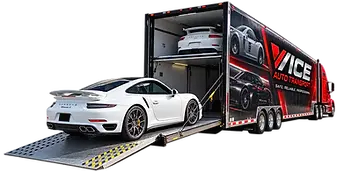
For most standard vehicles, open transport is the most common option. It is generally the most budget-friendly and widely available format for sedans, SUVs, and light trucks. Enclosed transport costs more, but it gives added protection for collector cars, high-end vehicles, classics, exotic models, and any unit where exposure to weather and road debris is a concern.
Pickup windows matter too. Car shipping is rarely like parcel delivery where an exact minute is promised days in advance. Long-haul transport runs on route density, driver hours, weather, traffic, and loading sequence. Good communication matters because a realistic window is more valuable than an overpromised date.
What affects cross country car shipping cost
Price is usually the first question, and the honest answer is that it depends on the lane. A vehicle moving between major metro areas on a busy route is often easier to price than one going to or from a remote town, mountain area, island port, or lightly traveled corridor.
Distance is the base factor, but not the only one. Vehicle size and weight affect trailer space. A full-size pickup takes up more room than a compact sedan, and oversized vehicles may require specialized equipment. If the vehicle does not run, that can also change the rate because extra tools or loading support may be needed.
Season plays a role. Summer moves, snowbird demand, and year-end shipping cycles can tighten capacity and push rates higher. Winter weather in northern states can slow transit and reroute trucks. Flexible scheduling often helps customers get better pricing because the carrier has more room to build an efficient route.
Trailer type matters as well. Open transport is usually the practical choice for everyday vehicles. Enclosed transport costs more because there are fewer enclosed trailers on the road and fewer spots per load. For larger or specialized units, flatbeds, step-decks, hotshot trucks with ramps, or RGNs may be the right fit, but those options are priced differently because they solve different transport problems.
Open vs enclosed transport
This is where your budget and your comfort level meet. Open transport is the standard for a reason. It is efficient, more available, and usually the best value for ordinary daily drivers. If you are shipping a family SUV from California to Florida or sending a sedan to a college student in another state, open transport is often the straightforward answer.
Enclosed shipping makes sense when the vehicle itself changes the risk equation. A restored classic, low-clearance exotic, luxury model, or show car may justify the extra cost. You are paying for additional protection and often a more tailored handling process.
There is no one-size-fits-all answer here. Some customers want the lowest practical rate. Others care more about limiting exposure. Both are reasonable. The right choice depends on the vehicle, the route, and what would give you peace of mind.
Timing, transit, and realistic expectations
One of the biggest misunderstandings around cross country car shipping is the difference between pickup timing and transit timing. Pickup may happen within an agreed window, then the actual trip length depends on route conditions and the number of stops already scheduled on the truck.
Cross-country moves often take several days, and coast-to-coast transport can take longer depending on season and traffic flow. A direct route between major cities may move faster than a shipment involving rural pickup, port handling, or a transfer to reach Alaska, Hawaii, Puerto Rico, Guam, or the U.S. Virgin Islands.
If your schedule is tight, say so early. A good shipping partner can explain what is realistic and whether your request needs a faster equipment solution or a different pickup window. Clear planning at the beginning usually prevents the last-minute frustration customers want to avoid.
Preparing your vehicle before pickup
The prep is simple, but it matters. Wash the vehicle so its condition is easy to inspect. Remove personal items unless you have been told what is allowed. Fold in mirrors if needed, check for leaks, make sure the battery is charged, and keep about a quarter tank of gas unless instructed otherwise.
You should also document the vehicle's condition with photos before pickup. The driver will typically complete an inspection report at pickup and delivery, and your own timestamped photos are a smart backup. This is not about expecting a problem. It is about keeping the process clear and professional.
If the car has quirks, disclose them. A tricky alarm system, low ground clearance, a weak battery, or a non-working parking brake can affect loading. The more accurate the information, the smoother the pickup.
Door-to-door is convenient, but access matters
Many customers ask for residential door-to-door service because it is the easiest option. In most cases, that works well. But door-to-door does not always mean a tractor-trailer can fit directly in front of your house.
Low trees, narrow streets, HOA restrictions, tight apartment complexes, and urban parking rules can force a nearby meeting point instead. That is normal. A shopping center, wide side street, or large parking lot may be the safer handoff location for both pickup and delivery.
This is especially relevant in crowded cities and rural areas with limited truck access. Flexibility here helps avoid delays, and a good transport coordinator will tell you ahead of time if access could be an issue.
When specialized equipment is the better choice
Not every long-distance move belongs on a standard auto carrier. Lifted trucks, oversized SUVs, inoperable vehicles, equipment, and machinery may need a different setup. That is where flatbeds, step-decks, hotshot trucks with ramps, and RGNs come into play.
The advantage of specialized equipment is fit. Instead of trying to force an unusual load into a standard lane, the right trailer reduces loading problems and keeps the move safer. It may cost more than standard open transport, but for the wrong kind of load, cheap pricing can become expensive if the equipment is not appropriate.
This is also where experience matters. A customer shipping a standard sedan and a business moving commercial equipment are solving different logistics problems. They should not be quoted or scheduled the same way.
Choosing a company for cross country car shipping
The best choice is not always the lowest quote. A low number with vague timing, weak communication, or no discussion of trailer type can create more stress than savings. Customers usually do better when they work with a company that asks practical questions up front, explains the transport method clearly, and stays responsive during scheduling.
That matters even more on complicated moves. Remote locations, port-related transport, non-running vehicles, collector cars, and commercial shipments all benefit from hands-on coordination. Vice Auto Transport operates with that service mindset, which is especially useful for customers shipping across the mainland or to places many standard providers do not cover, including Alaska, Hawaii, Puerto Rico, Guam, and the U.S. Virgin Islands.
The real goal is not just getting a vehicle from point A to point B. It is getting there with the right equipment, a realistic schedule, and clear communication from start to finish.
Cross country car shipping works best when the plan fits the vehicle, the route, and your timeline. Ask the practical questions early, be honest about the condition and location, and choose the option that makes sense for your priorities. A well-planned shipment should feel manageable long before the truck arrives.


Comments