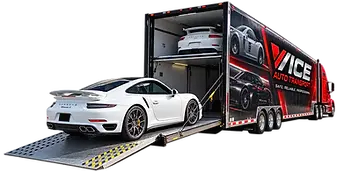


How to Ship a Cargo Van Interstate or Cross-Country

How to Ship a Cargo Van Across State Lines: Sprinter, Nissan NV, Ford Transit & E-350 Transport Guide
Buying a cargo van from another state can look simple until you need to get it home.
Maybe you've purchased a used Mercedes-Benz Sprinter at an auction, found a Ford Transit for your delivery business, bought a Nissan NV3500 from an out-of-state dealership, or need to relocate a fleet of work vans across the country.
Unlike shipping a standard sedan, transporting a cargo van can involve additional considerations involving height, wheelbase, weight, modifications, and the type of trailer needed.
A standard Ford E-350 cargo van may be suitable for equipment that cannot accommodate a high-roof Mercedes Sprinter or extended Ford Transit.
And a commercial van fitted with ladder racks, shelving, toolboxes, or other equipment may require a different transportation arrangement from the same model in its factory configuration.
This guide explains how interstate and cross-country cargo van transport works, which popular models can be shipped, what affects pricing, and how to prepare your van for pickup.
Can You Ship a Cargo Van Across the Country?
Yes. Cargo vans can be transported between states using appropriately equipped motor carriers.
However, not every standard auto transport trailer can accommodate every cargo van.
The vehicle's overall height, length, width, weight, ground clearance, and condition determine which transportation equipment may be suitable.
Some cargo vans can travel on conventional open auto transport trailers.
Others may require:
Flatbed trailers
Hotshot transportation
Specialized commercial vehicle haulers
Step-deck trailers
Other appropriately rated transportation equipment
The right equipment depends on the actual vehicle dimensions, weight, loading requirements, and applicable transportation limits.
Why Cargo Vans Require More Planning Than Standard Cars
Cargo vans are frequently taller and heavier than passenger vehicles.
Some models also have extended wheelbases, high roofs, dual rear wheels, or commercial modifications.
A van may fit within the weight capacity of a particular trailer but still exceed its usable height or loading clearance.
Likewise, a van that fits dimensionally may be too heavy for the remaining available trailer capacity.
That's why the vehicle's exact configuration matters more than simply telling a broker that you're shipping a van.
Popular Cargo Van Models That Can Be Shipped Interstate
Vice Auto Transport can help evaluate transportation options for a wide range of cargo vans, including older commercial models, newer delivery vans, and specialized work vehicles.
The following are some of the most commonly encountered models.
Mercedes-Benz Sprinter Van Transport
Mercedes-Benz Sprinter vans are widely used for commercial deliveries, mobile businesses, passenger transportation, and camper conversions.
They come in multiple configurations, including standard-roof, high-roof, and extended-length models.
Common examples include:
Mercedes Sprinter 2500
Mercedes Sprinter 3500
Mercedes Sprinter 3500XD
Mercedes Sprinter cargo vans
Sprinter passenger vans
Extended-wheelbase Sprinters
High-roof Sprinter vans
A standard-roof Sprinter may have different transportation options from a high-roof or extended model.
Some configurations exceed the practical height limits of conventional multi-car auto transport trailers.
A high-roof Sprinter may require a flatbed, step-deck, or another suitable commercial transport arrangement.
If the van has been converted into a camper, mobile workshop, or specialty service vehicle, provide the actual dimensions and weight rather than relying on factory specifications.
Roof-mounted air conditioners, solar panels, awnings, antennas, and other accessories can significantly affect transport clearance.
Nissan NV1500, NV2500 and NV3500 Cargo Van Shipping
Although Nissan discontinued production of its full-size NV commercial vans, these vehicles remain in use by contractors, delivery businesses, service companies, and private owners.
Common models include:
Nissan NV1500
Nissan NV2500 HD
Nissan NV3500 HD
Standard-roof Nissan NV
High-roof Nissan NV
Nissan NV passenger configurations
The Nissan NV2500 and NV3500 can be particularly heavy, depending on their configuration and installed equipment.
High-roof versions also require careful attention to overall height.
A standard-roof Nissan NV may be easier to accommodate on certain open trailers, while a high-roof NV3500 may require specialized equipment.
If the van has shelving, tool storage, ladder racks, or a commercial upfit, disclose those details before dispatch.
Ford E-150, E-250 and E-350 Cargo Van Transport
Ford's traditional E-Series vans remain popular in commercial fleets and among independent contractors.
Common models include:
Ford E-150
Ford E-250
Ford E-350
Ford E-350 Super Duty
Extended Ford Econoline vans
Ford E-Series passenger vans
E-Series cutaway and commercial body configurations
Older Ford Econoline cargo vans can sometimes be transported using conventional open auto transport equipment, depending on their dimensions and weight.
However, extended vans, heavy-duty configurations, and modified commercial units may require additional trailer capacity.
An E-350 fitted with contractor shelving and a roof ladder rack is not necessarily equivalent to an empty standard-roof E-350.
The same applies to cutaway chassis fitted with utility bodies or other commercial equipment.
These vehicles may require flatbed or specialized transportation.
Ford Transit Cargo Van Shipping
The Ford Transit is one of the most common modern commercial vans used by delivery companies, contractors, shuttle operators, and mobile businesses.
Popular configurations include:
Ford Transit 150
Ford Transit 250
Ford Transit 350
Ford Transit 350 HD
Low-roof Transit
Medium-roof Transit
High-roof Transit
Extended-length Transit
Transit passenger vans
The Transit lineup includes significant variations in roof height, wheelbase, and weight.
A low-roof Transit may fit equipment that cannot safely accommodate a high-roof extended Transit 350.
Some high-roof models are tall enough to require a flatbed, step-deck, or other appropriately configured carrier.
Dual-rear-wheel versions and heavy commercial upfits can also affect loading requirements.
When requesting a quote, specify the exact roof height, wheelbase, and any modifications.
Ram ProMaster Cargo Van Transport
Ram ProMaster vans are frequently used for deliveries, service businesses, camper conversions, and mobile workspaces.
Common models include:
Ram ProMaster 1500
Ram ProMaster 2500
Ram ProMaster 3500
Standard-roof ProMaster
High-roof ProMaster
Extended-length ProMaster
The ProMaster's front-wheel-drive design and body configuration differ from some competing commercial vans.
However, the key shipping considerations remain overall dimensions, weight, ground clearance, and loading requirements.
High-roof and extended ProMaster models may not fit conventional multi-car haulers.
Converted camper vans may have additional roof accessories, plumbing components, or underbody equipment that require special attention.
Chevrolet Express and GMC Savana Cargo Van Shipping
Chevrolet Express and GMC Savana vans remain common among contractors, fleet operators, delivery businesses, and service companies.
Popular models include:
Chevrolet Express 2500
Chevrolet Express 3500
GMC Savana 2500
GMC Savana 3500
Extended cargo configurations
Passenger van configurations
Commercial cutaway chassis
Standard-roof Express and Savana vans may offer more conventional transportation options than certain high-roof European-style vans.
However, heavy-duty configurations, extended bodies, commercial modifications, and added equipment can change the requirements.
Cutaway models fitted with box bodies, utility compartments, or specialty equipment should be evaluated separately.
Smaller Cargo Vans: Transit Connect, NV200 and ProMaster City
Not every commercial van is oversized.
Smaller cargo vans may be easier to accommodate on conventional auto transport trailers.
Examples include:
Ford Transit Connect
Nissan NV200
Chevrolet City Express
Ram ProMaster City
Mercedes-Benz Metris
These compact commercial vehicles are commonly used for local deliveries, small businesses, and service operations.
Their smaller dimensions can make transportation more straightforward, although the exact vehicle condition and configuration still matter.
Many of these models are discontinued in the U.S. market but remain available as used vehicles.
Why Roof Height, Wheelbase and Weight Matter
One of the biggest mistakes customers make is assuming that every van of a particular model can ship on the same trailer.
That's not always the case.
For example, a Ford Transit 250 with a low roof may have very different loading requirements from a high-roof extended Transit 350.
The same applies to Mercedes Sprinter and Nissan NV configurations.
Overall Height
High-roof cargo vans can exceed the practical clearance available on standard multi-car auto transport trailers.
Carriers must account for the height of the vehicle once it's loaded, not simply its height while parked on the ground.
A tall van may require transportation on a lower deck or specialized equipment.
Length and Wheelbase
Extended cargo vans occupy more trailer space.
A longer wheelbase can also affect loading angles, ramp clearance, and vehicle positioning.
Carriers need to know whether the van is a standard or extended configuration.
Vehicle Weight
Commercial vans can be substantially heavier than passenger cars.
Installed shelving, refrigeration systems, service equipment, generators, and other modifications may increase the actual weight.
The carrier must have sufficient capacity to transport the vehicle legally and safely.
Modified Work Vans
Common modifications include:
Ladder racks
Roof storage systems
Interior shelving
Toolboxes
Refrigeration units
Liftgates
Roof-mounted air conditioners
Solar panels
Camper conversion equipment
Auxiliary batteries
Generators
Extended bumpers
These modifications may affect the van's dimensions, weight, center of gravity, and loading requirements.
Provide photographs and actual measurements whenever possible.
Open Auto Transport, Flatbed and Specialized Cargo Van Shipping
Standard open auto transport is often the most economical option when the van fits safely within the carrier's equipment limits.
However, larger commercial vans may require different transportation methods.
Standard Open Auto Transport
Conventional open carriers may be suitable for some smaller and standard-roof cargo vans.
These trailers are commonly used to move multiple passenger vehicles.
They can provide economical transportation when the van's dimensions and weight are compatible.
However, a standard multi-car hauler may not be able to accommodate a high-roof Sprinter, extended Transit, or heavily modified work van.
Flatbed Cargo Van Transport
Flatbed transportation may be appropriate for oversized or unusually configured cargo vans.
A flatbed can offer additional flexibility for vehicles that do not fit conventional auto transport equipment.
However, overall loaded height, securement, trailer capacity, and loading arrangements must still be evaluated.
Flatbed transportation may cost more because the equipment and available carrier network differ from standard passenger vehicle transport.
Hotshot Cargo Van Shipping
Hotshot carriers commonly use heavy-duty pickup trucks with appropriately rated trailers.
Depending on the van's dimensions and weight, hotshot transportation may provide a practical alternative for certain shipments.
However, not every hotshot trailer can safely carry a large commercial van.
The carrier must have suitable loading equipment, securement capacity, and legal weight capacity.
Step-Deck and Specialized Commercial Transport
Certain tall or heavy cargo vans may require step-deck or other specialized commercial transportation equipment.
These arrangements are evaluated based on the vehicle's actual dimensions, loading requirements, and route restrictions.
The goal is to match the van with equipment that can transport it safely and legally.
Is Enclosed Transport Available for Cargo Vans?
Enclosed transportation is generally not a practical option for full-size cargo vans, particularly high-roof or extended-wheelbase models.
Conventional enclosed auto transport trailers are primarily designed for passenger cars, sports cars, and other vehicles that fit within their interior height, width, length, and loading clearances.
Full-size cargo vans such as high-roof Mercedes Sprinters, Ford Transits, Nissan NVs, and Ram ProMasters frequently exceed those limitations.
Even when a van's height appears close to the trailer's advertised clearance, the loading ramp angle, interior dimensions, and available securement space may prevent safe loading.
A potential exception is a Conestoga-style trailer, which uses a retractable tarp enclosure over a flatbed or step-deck configuration.
Certain Conestoga trailers may accommodate cargo vans that cannot fit inside conventional enclosed auto carriers, provided the van's dimensions, weight, loading requirements, and the trailer's clearance are compatible.
However, Conestoga equipment is uncommon for individual cargo van shipments and is not typically a realistic or economical option for standard interstate vehicle transportation.
For most customers, an appropriately equipped open carrier, flatbed, hotshot, or step-deck trailer is the practical solution.
How Much Does It Cost to Ship a Cargo Van Across State Lines?
Cargo van transportation pricing depends on more than mileage.
The actual cost reflects the van's dimensions, weight, condition, pickup and delivery locations, equipment requirements, and available carrier capacity.
A standard Ford E-250 traveling between major metropolitan areas may have different pricing from a high-roof Mercedes Sprinter requiring specialized flatbed transportation.
Factors That Affect Cargo Van Shipping Prices
Important factors include:
Distance between pickup and delivery
Exact ZIP codes
Vehicle make and model
Roof height and wheelbase
Overall dimensions
Actual vehicle weight
Running or non-running condition
Trailer and equipment requirements
Seasonal demand
Fuel costs
Pickup flexibility
Residential or commercial access restrictions
Larger vans can require more trailer space, while unusually tall or heavy vehicles may need specialized equipment.
That can increase the price compared with shipping a standard passenger vehicle.
Why the Lowest Quote May Not Be Realistic
An unusually low quote doesn't guarantee that a carrier will accept the shipment.
This is especially important for oversized cargo vans.
If a broker quotes a high-roof Sprinter as though it were a standard sedan, the original price may not reflect the equipment actually needed.
The result can be a delayed shipment or a request for additional compensation.
A realistic quote should account for the van's true configuration from the beginning.
Fuel prices also affect long-distance transportation costs. Read our guide on how rising diesel prices affect auto transport.
Popular Interstate and Cross-Country Cargo Van Shipping Routes
Cargo vans move between states for commercial purchases, business relocations, fleet transfers, and private sales.
Common route examples include:
Florida to Texas Cargo Van Shipping
Businesses frequently move commercial vehicles between Florida and Texas.
Examples include:
Miami to Houston
Fort Lauderdale to Dallas
Orlando to Austin
Tampa to San Antonio
A standard cargo van may have different carrier options from an extended high-roof model requiring specialized equipment.
California to New York, New Jersey and Pennsylvania
Cross-country commercial van transportation may involve routes such as:
Los Angeles to New York
San Diego to Newark
Riverside to Philadelphia
Sacramento to Pittsburgh
These shipments can involve dealership purchases, business relocations, and fleet transfers.
Texas to Arizona and California
Commercial vehicles may also move along routes such as:
Houston to Phoenix
Dallas to Los Angeles
San Antonio to San Diego
El Paso to Riverside
Accurate dimensions and weight are especially important when arranging transport for larger commercial vans.
Southeast to Mid-Atlantic and Northeast
Additional route examples include:
Atlanta to Baltimore
Charlotte to Philadelphia
Nashville to New Jersey
Jacksonville to Virginia
The same routes can be arranged in the reverse direction.
Carrier availability and pricing depend on the specific van and transportation requirements.
Can You Ship a Non-Running Cargo Van?
Yes, many non-running cargo vans can be transported.
However, the carrier needs accurate information about the vehicle's condition.
A van that doesn't start but rolls, steers, and brakes may be manageable with suitable winch-equipped transportation equipment.
A van with locked wheels, damaged steering, flat tires, or severe collision damage can require additional loading arrangements.
Before requesting a quote, confirm:
Does the engine start?
Does the transmission shift into neutral?
Does the van roll freely?
Does the steering function?
Do the brakes work?
Are the tires inflated?
Are the keys available?
Is there collision or underbody damage?
Do not describe a vehicle as running simply because it starts if it cannot safely move under its own power.
Accurate information helps prevent equipment mismatches and pickup delays.
Shipping Cargo Vans Purchased at Copart, IAA, Manheim or Dealerships
Many cargo vans are purchased through auctions and commercial vehicle dealerships.
Before scheduling transportation, verify that the van is actually ready for release.
Important details include:
Auction or dealership name
Lot or stock number
Buyer information
Release authorization
Pickup hours
Storage deadlines
Vehicle running condition
Keys and loading requirements
Some auctions charge storage fees when vehicles aren't collected by the required deadline.
A carrier cannot collect a vehicle that hasn't been released.
If a dealership has delayed arranging transportation, our article on what to do when a dealership is taking too long to ship your vehicle explains some common causes.
Can You Leave Tools, Equipment or Personal Belongings Inside a Cargo Van?
This is particularly important for commercial vehicles.
A cargo van may contain shelving, tools, spare parts, delivery equipment, or other business property.
However, an auto transport carrier is generally being hired to transport the vehicle, not its commercial inventory.
Loose tools, merchandise, and household belongings should not be assumed acceptable.
What About Installed Equipment?
Permanently installed shelving, racks, partitions, and other commercial upfits may be transported as part of the vehicle when disclosed and accepted by the carrier.
However, their weight and dimensions must be included when evaluating the shipment.
What About Loose Tools and Cargo?
Loose tools, inventory, boxes, and equipment may be prohibited or restricted.
Some carriers may permit limited belongings with advance approval.
However, excessive weight or occupied space can result in additional charges if the carrier agrees to accept the items.
Personal belongings and commercial inventory are generally not covered by standard motor carrier vehicle cargo insurance.
Ask about applicable coverage and exclusions before dispatch.
For more information, see our guide on arranging car shipping when relocating to another state.
How to Prepare a Cargo Van for Interstate Transport
Proper preparation can help avoid delays and disagreements at pickup.
Before the carrier arrives:
Remove loose tools and valuables.
Secure approved installed equipment.
Photograph the van from all sides.
Photograph the roof and accessories.
Document existing scratches, dents, and body damage.
Check for fluid leaks.
Make sure the battery is charged.
Confirm that the tires hold air.
Leave approximately one-quarter tank of fuel unless instructed otherwise.
Provide a working key.
Explain any unusual starting or operating procedures.
If the van has been sitting at an auction, dealership, or repair facility, confirm its current condition before dispatch.
Document the Vehicle's Condition
At pickup, the driver should complete a vehicle condition report or Bill of Lading.
Review the recorded condition before signing.
At delivery, inspect the van again before completing the final paperwork.
If you notice new damage, document it immediately and note the concern on the delivery paperwork before the driver leaves.
Door-to-Door Cargo Van Shipping and Pickup Access
Door-to-door transportation generally means the carrier gets as close to the pickup and delivery addresses as safely and legally possible.
Large transport trucks may not be able to enter:
Narrow residential streets
Tight business parks
Low-clearance entrances
Gated communities
Congested downtown areas
Restricted commercial properties
A nearby truck-friendly meeting location may be necessary.
Commercial dealerships, fleet yards, and warehouses may provide suitable pickup access, but confirm loading arrangements and operating hours in advance.
Learn more in Are Residential Pickups Allowed for Auto Transport?.
How Long Does Cross-Country Cargo Van Shipping Take?
Transit time depends on distance, route, equipment, and carrier scheduling.
For long-distance shipments, transit may take several days to approximately two weeks after pickup, depending on the destination and operating conditions.
Specialized commercial equipment may require additional time to arrange.
Pickup scheduling is separate from transit time.
A van may be available for pickup before a suitable carrier has been assigned.
If your vehicle is needed for a business opening, fleet deployment, job-site assignment, or another strict deadline, communicate that before booking.
Don't build an important business schedule around an unconfirmed exact delivery date.
Why Choose Vice Auto Transport for Interstate Cargo Van Shipping?
Cargo vans require more attention to dimensions, equipment, and loading requirements than many standard passenger vehicles.
At Vice Auto Transport, we coordinate nationwide vehicle transportation with independent motor carriers.
We help customers evaluate transportation options for commercial vans, including standard cargo vans, extended models, high-roof vehicles, and specialty configurations.
Depending on the vehicle, that may involve conventional open auto transport, flatbed, hotshot, or specialized commercial transportation equipment.
We verify carrier authority and insurance information/documentation as part of dispatch and help customers understand realistic pickup expectations.
Most importantly, when you have questions, you can speak with a real transport professional.
Whether you're purchasing a single used work van or coordinating transportation for several commercial vehicles, accurate information and clear communication make the process easier.
Get a Quote to Ship a Sprinter, Nissan NV, Ford Transit or E-350 Cargo Van
If you need to transport a cargo van across state lines, Vice Auto Transport can help review the vehicle's requirements and available carrier options.
To get started, provide:
Pickup and delivery ZIP codes
Vehicle year, make, and model
Roof height and wheelbase
Overall length, width, and height
Approximate vehicle weight
Running condition
Photos of modifications or installed equipment
Preferred pickup dates
The more accurate the information, the easier it is to determine suitable transportation equipment and realistic pricing.
Call: 1-800-541-0696
Text: 754-800-4112
Vice Auto Transport — Let Us Handle the Miles.


Comments