.png)


How to Transport a Classic Car Safely Across the Country

A classic car can be mechanically sound, beautifully restored, and still be a poor candidate for a long highway drive. Older cooling systems, aging tires, rare trim, low ground clearance, and limited replacement parts all change the equation. Knowing how to transport a classic car safely means planning for the vehicle’s real condition, not just its resale value.
For a short, local move, a carefully driven car may make sense. For a cross-country purchase, auction pickup, seasonal relocation, or restoration project, professional transport is usually the lower-risk choice. The goal is not simply getting the car from one zip code to another. It is getting it there in the same condition it left.
Choose the Right Transport for a Classic Car
The first decision is whether to use an open or enclosed trailer. Both can be appropriate, but they protect the vehicle differently.
Open transport is the more budget-conscious option. It is widely available, works well for many driver-quality classics, and can be a practical choice when the car runs, has normal clearance, and is not especially vulnerable to weather or road debris. The trade-off is exposure. The car will be outside during the trip, just as it would be on the road, with added exposure to rain, dust, and debris.
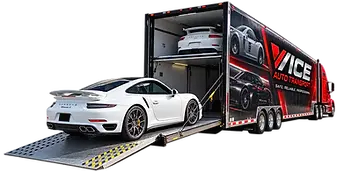
Enclosed transport offers a higher level of protection from weather, road grime, and unwanted attention at fuel stops or overnight parking areas. It is often the preferred option for freshly restored vehicles, high-value collector cars, low-mileage originals, convertibles, or cars with delicate paint and trim. It costs more and may require more flexibility on timing, but the extra protection can be worthwhile.
Trailer type also matters. A low-profile classic, race car, or vehicle with an air dam may need a trailer with long loading ramps, lift-gate capability, or a lower deck angle. Do not assume every trailer can load every vehicle safely. Tell the transport coordinator the exact year, make, model, ride height, and whether the vehicle has any clearance concerns.
When an Open Trailer Is Still a Good Choice
Not every classic requires an enclosed trailer. An open carrier can be a sensible fit for a solid driver-quality vehicle that is being moved on a realistic budget. The key is matching expectations to the service. If a car has fresh show-quality paint, rare original glass, or a soft top that does not seal well, enclosed shipping is generally the better call.
Prepare the Vehicle Before Pickup
Preparation prevents most pickup-day problems. A carrier needs to be able to load, secure, and move the car without surprises. Start several days before the scheduled window rather than waiting until the driver is nearby.
Wash the exterior well enough to document its condition. Take clear photos of all four sides, the roof, the wheels, bumpers, glass, interior, engine bay, and any existing scratches, chips, dents, or paint imperfections. Photograph the odometer and capture close-ups of rare emblems or fragile trim. Time-stamped photos provide a useful record if questions come up later.
Remove personal belongings from the cabin and trunk. Shipping a car is not the same as hiring a household mover, and loose items can shift, break, or create unnecessary complications. Remove radar detectors, removable stereo equipment, toll tags, garage remotes, documents with personal information, and loose tools. If there are specialty parts that cannot be secured, such as a removable spoiler or detachable side mirror, discuss them before pickup.
Keep the fuel tank at about one-quarter full. That is enough for loading and unloading without adding unnecessary weight. Check for active leaks, especially fuel, oil, coolant, or brake fluid. A small seep may be manageable when disclosed in advance, but an active leak can delay loading or make the car unsuitable for a shared carrier.
The battery should be secure and charged, the tires should hold air, and the brakes should function. If the vehicle does not run, does not steer, has weak brakes, or cannot roll freely, say so when requesting a quote. Non-running classics can still be moved, but they may need a winch, extra labor, or specialized equipment. Accurate information helps prevent a last-minute price change or failed pickup.
Be Honest About Mechanical and Clearance Issues
Many classic cars have quirks that are normal to their owners but unfamiliar to a carrier. Maybe the ignition needs a specific sequence, the door latch sticks, the transmission only shifts when warmed up, or the parking brake does not hold. Write these details down and provide simple instructions at pickup.
Let the transporter know about low exhaust pipes, a long front overhang, loose chrome, fragile hood pins, aftermarket wheels, or a lowered suspension. For a car with extreme clearance limitations, ask whether the carrier has the right ramp angle and loading method. Forcing a low car onto the wrong trailer can damage the valance, exhaust, frame, or suspension before the trip even begins.
If the vehicle has a convertible top, make sure it is latched and weather-tight. If it is not, enclosed shipping is strongly recommended. For project cars with missing windows, incomplete interiors, or exposed electrical systems, share photos before booking so the proper equipment can be arranged.
Confirm How the Car Will Be Secured
A classic car should be secured by its tires whenever possible, using wheel straps or soft tie-down systems designed to hold the vehicle in place without putting unnecessary pressure on suspension components or body parts. The car should not rely on the parking brake alone. It should be properly restrained for movement over bumps, turns, and highway miles.
Ask how the carrier typically secures collector vehicles and whether they use soft straps around the tires. This is especially relevant for cars with older suspension designs, delicate undercarriage components, or restored finishes. A professional carrier will understand that a 1960s coupe, a vintage pickup, and a modern SUV do not all load and secure the same way.
Ground clearance should be discussed again before dispatch if the vehicle is very low. Good communication is not overkill here. A driver who knows what is coming can arrive prepared rather than improvising at the curb.
Review Coverage and the Bill of Lading
Before pickup, ask direct questions about cargo coverage and the claims process. Understand what is covered while the vehicle is in transit, whether there are exclusions, and what documentation would be needed if damage were discovered. Keep copies of the booking details, condition photos, and any written notes about the vehicle’s special needs.
At pickup, the driver will usually complete a bill of lading or vehicle condition report. Walk around the car with the driver and make sure existing damage is accurately marked. Do not rush this step because the same document will be used during delivery. If lighting is poor or the car is dirty, take your own well-lit photos before it is loaded.
At delivery, inspect the car before signing the final paperwork. Compare the vehicle to your pickup photos and look over the paint, wheels, glass, trim, roof, and lower body panels. Check for anything that may have shifted during transport. If you see a concern, note it on the delivery paperwork before the driver leaves and take photos immediately.
Plan for Pickup and Delivery Access
A full-size car carrier may not fit on a narrow residential street, in a tight cul-de-sac, beneath low trees, or through a community with parking restrictions. Door-to-door service means the carrier gets as close as safely and legally possible. Sometimes the best pickup point is a nearby wide street, shopping center lot, truck stop, or other approved meeting location.
Choose a place with room to load without blocking traffic and with enough space to inspect the car. If someone else will release or receive the vehicle, make sure they understand the car’s instructions and are authorized to sign paperwork. A friend or family member can help, but they need to know what to look for.
Timing also deserves some flexibility. Carrier schedules can be affected by weather, traffic, legal driving-hour limits, and other pickups along the route. A reputable transport coordinator should communicate clearly, but an exact minute-by-minute appointment is not always realistic on a long-haul move.
Work With a Transport Team That Asks the Right Questions
A safe shipment starts with a detailed quote conversation. Be ready to provide the pickup and delivery zip codes, vehicle year and model, operating condition, approximate value, modifications, and preferred timing. Photos are helpful for unusually low, rare, or incomplete vehicles.
Vice Auto Transport can help match classic car owners with carriers and equipment suited to the job, whether the priority is enclosed protection, budget-conscious open transport, or special loading needs. The right arrangement is based on the car itself, not a one-size-fits-all shipping label.
Your classic has survived decades because someone made careful choices along the way. Give its next move the same attention: document it, disclose its needs, choose the right equipment, and leave room for a careful inspection at both ends of the trip.



Comments