.png)


Car Shipping to Hawaii: What to Expect

Moving a vehicle across the Pacific is not the same as sending it across state lines. With car shipping to Hawaii, the route usually includes both overland transport and ocean shipping, which means timing, paperwork, port access, and vehicle condition all matter more than people expect.
For some customers, the goal is simple - get a daily driver to Oahu before a relocation. For others, it is coordinating a truck, SUV, or specialty vehicle from the mainland to Maui, Kauai, or the Big Island without adding stress to an already busy move. Either way, the process works well when you know what is involved before your vehicle reaches the port.
How car shipping to Hawaii usually works
Most Hawaii shipments start with one of two plans. The first is port-to-port service, where you bring the vehicle to a mainland port and pick it up at the Hawaii port after arrival. The second is a door-to-port or door-to-door style setup, where inland transport is arranged on one or both sides to reduce the amount of driving and coordination you have to handle yourself.
That difference matters. If you live near Los Angeles, Oakland, Seattle, or another servicing port, dropping off the vehicle may be easy. If you are in the middle of the country, the inland leg becomes a major part of the move and should be factored into both budget and timeline.
In practical terms, the shipment may include truck transport from your home or business to the port, port processing and booking, ocean transit to Hawaii, then pickup or final delivery depending on the service you choose. Customers often think only about the boat, but the full move is usually a combination of logistics steps.
What affects the cost of car shipping to Hawaii
Price depends on more than mileage. The biggest factor is usually the route, meaning where the vehicle starts on the mainland and which island it is headed to. Shipping to Oahu is often more straightforward than shipping to a neighboring island because Honolulu serves as the main entry point for many vehicle shipments.
Vehicle size also matters. A compact sedan generally costs less to move than a lifted truck, large SUV, or van because oversized vehicles take up more deck or container space and can trigger different rate structures. If the vehicle is inoperable, that can add cost too because special loading equipment may be required.
Timing can shift the number as well. If you have flexible dates, it is often easier to work with available vessel schedules and inland carrier space. If you need a tighter pickup window or faster overland movement to make a specific sailing date, the quote may reflect that.
There is also a service-level trade-off. A basic port-to-port move is usually the more budget-conscious option. Adding residential pickup, final delivery, enclosed transport for a high-value vehicle, or special handling for low-clearance units will increase the total, but for many customers the convenience is worth it.
Transit time is not just ocean time
One of the most common questions is how long the shipment takes. The answer depends on the full route, not just the time spent on the water.
If your vehicle is already near the departure port and catches the next available sailing, the process can move fairly quickly. But if the car first needs to travel from the East Coast, Midwest, or South to the port, inland scheduling will add time. Port processing, cut-off dates, and vessel schedules matter too. Missing a sailing window can push delivery back more than customers expect.
This is why early planning helps. If you are relocating on a fixed date, buying a vehicle remotely, or coordinating a family move, it is smart to start the conversation before the last minute. A realistic schedule gives you more options and fewer surprises.
Port-to-port vs. door-to-port service
There is no single right option for every customer. It depends on your location, your budget, and how much coordination you want to do yourself.
Port-to-port can be a good fit if you live close to the departure port and have transportation lined up on the Hawaii side. It is efficient and often more affordable. But it also puts more responsibility on you for drop-off timing, document handling, and pickup after arrival.
Door-to-port or port-to-door service makes more sense when convenience is the priority. Families in the middle of a move, military households, online car buyers, and customers shipping from inland states often prefer a setup that reduces extra driving and handoffs. The overall cost may be higher, but it can save time and simplify the process.
For customers shipping luxury, collector, or specialty vehicles, there is another layer to consider. If the vehicle needs enclosed land transport before reaching the port, that should be arranged upfront rather than treated as an afterthought.
Getting your vehicle ready for Hawaii shipping
Preparation is one of the easiest ways to avoid delays. Before shipping, the vehicle usually needs to be clean enough for inspection, with no excessive personal items inside. Most carriers and ports restrict household goods in the vehicle, and loose items can create problems during transport.
You will also want to make sure the battery is charged, tires are properly inflated, and there are no major fluid leaks. If the vehicle has mechanical issues, say so early. An operable and inoperable unit are handled differently, and accurate information helps prevent problems at loading.
Fuel level is usually kept low - often around a quarter tank. That is enough for loading and unloading without adding unnecessary weight. Alarm systems should be disabled if required, and any custom instructions should be shared in advance.
Paperwork matters too. Depending on the shipment, you may need registration, photo identification, lienholder authorization, or other ownership-related documents. If the vehicle is newly purchased, financed, or being sent by someone other than the titled owner, those details should be confirmed before the port appointment.
Common issues that can slow a shipment
Most delays come from details that seem small at first. A missed port cut-off, an incorrect VIN on paperwork, a dead battery, or a customer arriving without the required documents can all hold up a shipment.
Island routing can also affect timing. A vehicle bound for Honolulu may move on a different schedule than one continuing to Maui, Kauai, or the Big Island. If your final destination is not Oahu, ask how inter-island handling works so you know whether there is an extra transfer step.
Weather and port congestion can play a role too. Ocean transport is generally reliable, but it still works within real-world schedules. Good communication makes a difference here. When you know the milestones - inland pickup, port arrival, sailing, and port availability in Hawaii - the process feels much more manageable.
Who usually uses car shipping to Hawaii
This service is not limited to one type of customer. We regularly see demand from families relocating, military households, seasonal residents, students, online vehicle buyers, dealerships, and businesses moving fleet units or work trucks.
The best setup depends on the use case. Someone shipping a basic commuter car may prioritize price and port convenience. A dealer moving inventory may care more about scheduling consistency and condition reporting. A family with one SUV and a tight move date may value direct communication more than shaving every dollar off the quote.
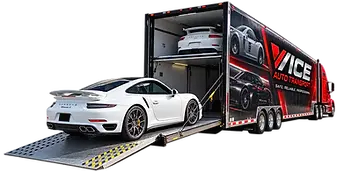
That is where a hands-on logistics approach helps. Companies like Vice Auto Transport arrange transport based on the vehicle, route, timing, and service level rather than forcing every customer into the same shipping format.
What to ask before you book
Before confirming a shipment, ask what the quote includes and where your responsibilities start and end. That sounds simple, but it clears up most misunderstandings.
Make sure you know the origin and destination method, whether the price covers inland transport, which port is being used, what documents are required, how inoperable vehicles are handled, and what the current transit window looks like. If you are shipping a larger truck, modified SUV, or specialty vehicle, ask whether there are size restrictions or added handling requirements.
It is also smart to ask about communication. A good transport setup should not leave you guessing where the vehicle is or what happens next. Clear updates matter even more when the move includes both road and ocean segments.
Shipping a vehicle to Hawaii does not have to feel complicated when the plan matches the route, the timeline, and the vehicle itself. The most helpful first step is getting accurate details in place early so the move works the way you need it to.


Comments