.png)


Can I Ship a Lifted Truck? What to Know First

A lifted truck can look right at home on the road and become a real logistics question at pickup. So, can I ship a lifted truck? Yes, in most cases. The key is matching its actual height, tire size, weight, and clearance needs to a carrier with the right trailer and loading equipment.
A standard transport trailer is built around standard vehicles. Once a truck has a suspension lift, oversized tires, a roof rack, light bar, or other added height, the carrier has to plan for more than simply driving it onto the trailer. Accurate details upfront prevent last-minute equipment changes, delays, or a driver arriving with a trailer that cannot safely load your truck.
Can I Ship a Lifted Truck on an Open Trailer?
Many lifted trucks ship successfully on open auto transport trailers. Open transport is usually the most budget-conscious option and is widely available for pickups, Jeeps, SUVs, and modified trucks. But it is not automatically the right fit for every lift.
The issue is not just whether the truck fits in a parking spot. A carrier has to account for the truck's total loaded height once it is sitting on a trailer deck. A tall truck on a high trailer can exceed practical bridge-clearance limits or leave too little margin for a safe route. The truck also needs enough room to clear ramps, upper-deck beams, and other vehicles on the load.
A mild lift with normal-width tires may fit on a conventional multi-car hauler. A truck with a large suspension lift, 35-inch or 37-inch tires, a tall cab, or a rooftop accessory may need a lower-deck position, a specialized open trailer, or a single-vehicle flatbed setup. The final decision comes down to measurements, not just the number of inches in the lift kit.
What Information Does a Carrier Need?
The fastest way to get an accurate quote is to provide a clear description of the truck before booking. Saying it is "lifted" is a helpful start, but the carrier needs enough detail to determine what can safely haul it.
Have these details ready:
Year, make, model, cab configuration, and bed length
Total height from the ground to the highest fixed point
Tire size, wheel width, and whether the tires extend beyond the fenders
Type and amount of lift, such as leveling kit, body lift, or suspension lift
Added equipment, including roof racks, toolboxes, bumpers, winches, light bars, and spare tires
Whether the truck runs, steers, brakes, and can be loaded under its own power
Photos are especially useful. Side and front photos let the transport coordinator and carrier see the stance, clearance, and accessories that may affect loading. If you are unsure of the exact height, measure on level ground from the pavement to the truck's highest point. Do not estimate based only on the lift-kit description, since tire size and aftermarket accessories can add several more inches.
Height Is Not the Only Clearance Concern
A lifted truck has more ground clearance, which often helps with ramp angles. However, it can still be difficult to load because of its overall height and width. Wide tires may not fit comfortably between trailer rails. Long wheelbase trucks can create positioning challenges. Very tall vehicles may need a lower trailer deck than a conventional auto hauler can provide.
Accessories can matter just as much as the lift. A roof tent, ladder rack, stacked cargo, tall antenna, or light bar may turn an otherwise shippable truck into a specialized load. Removable items should be removed when practical. This protects the item and gives the carrier more flexibility when arranging equipment.
The Best Trailer for a Lifted Truck
There is no one trailer that works best for every lifted truck. The right option depends on the truck's measurements, value, route, schedule, and your budget.
For many trucks, an open trailer is the practical choice. It provides dependable interstate transport at a lower cost than enclosed shipping. Your truck will be exposed to normal road weather and debris, much like it would be during a long road trip, but it remains professionally secured and inspected at pickup and delivery.
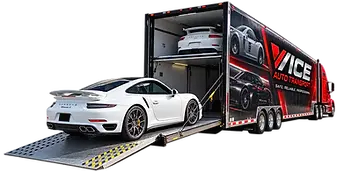
An enclosed trailer is worth considering for high-value builds, show trucks, restored classics, custom paint, or trucks with sensitive aftermarket equipment. Enclosed transport adds weather and road-debris protection, but availability can be more limited and pricing is generally higher. Height still matters inside an enclosed trailer, so a truck being enclosed does not eliminate the need for accurate measurements.
For unusually tall, wide, heavy, or modified trucks, a flatbed, lowboy-style setup, step-deck, or hotshot trailer with ramps may be the better answer. These options can offer more loading flexibility than a standard multi-car carrier. They may cost more because the carrier is reserving equipment and space for a load that cannot be handled like a typical sedan or stock pickup.
Vice Auto Transport, operating as Vice One Logistics, can help match lifted trucks with open, enclosed, flatbed, hotshot, step-deck, or other appropriate equipment based on the vehicle and route.
Why Lifted Truck Shipping May Cost More
A lift does not always create a large price increase, but it can affect the rate. Carriers price around space, weight, loading difficulty, route demand, and available equipment. If your truck takes the place of a larger vehicle, needs a specific trailer position, or requires a specialty carrier, the transport cost can rise.
Oversized tires, extended bumpers, toolboxes, and heavy aftermarket parts can also increase the truck's total weight. A diesel crew cab with a long bed and major modifications is very different from a two-door pickup with a small leveling kit. Be transparent about the build so the quote reflects the actual job.
Trying to book a shipment as a standard truck and disclosing the modifications only when the driver arrives can create problems. The driver may not have clearance, the carrier may need to rework the load plan, or the truck may need to wait for another trailer. A correct quote is more useful than a low quote that cannot be honored with the equipment available.
Pickup and Delivery Access Matters
Your truck may fit the trailer perfectly, while your street does not. Large auto transport rigs need room to turn, park, load, and exit safely. Narrow residential streets, low tree branches, tight cul-de-sacs, steep driveways, and apartment complexes can make direct doorstep loading difficult.
When access is limited, arrange to meet the driver at a nearby open location, such as a large shopping center lot, truck stop, industrial area, or wide street where stopping is permitted. This is common in vehicle transport and often makes the pickup or delivery faster and safer for everyone.
If the truck is being shipped to or from Alaska, Hawaii, Puerto Rico, Guam, or the U.S. Virgin Islands, there may also be port requirements and timing considerations. Modified vehicles can still move through these routes, but correct vehicle details are needed early so the inland carrier and port portion of the move are coordinated properly.
Prepare Your Lifted Truck Before Pickup
Treat preparation as part of protecting the truck. Wash it enough to make an accurate inspection possible, then photograph all sides, the wheels, windshield, bumpers, and any existing damage. Keep a copy of those photos until delivery is complete.
Remove loose personal items, aftermarket gear that is not secured, and anything mounted externally that could shift in transit. Retract or remove antennas when possible. Make sure the battery is charged, the tires are properly inflated, and the truck has enough fuel to load and unload, but not a full tank. About one-quarter tank is usually sufficient.
Let the driver know about any quirks before loading. That includes a manual transmission, air suspension, weak brakes, difficult steering, a remote-start system, alarm issues, or a truck that sits unusually high or wide. A running truck is easier to move, but non-running lifted trucks can still ship with the right equipment and advance notice.
Get the Fit Right Before You Book
A lifted truck is not a problem for vehicle transport. It simply needs to be quoted and dispatched as the truck it is today, not the stock version it was when it left the factory. Send the measurements, photos, pickup and delivery zip codes, and details of the modifications before scheduling.
That extra minute of preparation gives the carrier a fair chance to assign the right trailer, plan a safe load position, and keep your shipment moving without surprises. If you have questions about a particular lift or build, ask before booking rather than finding out at the curb on pickup day.


Comments