.png)


Chicago to Phoenix & SoCal Seasonal Car Shipping

Chicago to Phoenix and Southern California Car Shipping: A Seasonal Guide
A Chicago winter can make a sunny driveway in Phoenix or Southern California feel less like a vacation and more like a deadline.
Whether you're heading south for the winter, relocating permanently, or sending a second vehicle to a seasonal home, shipping a car from the Chicago area to Arizona or Southern California takes a little planning.
This is an established long-distance transportation corridor, but not every shipment works the same way.
A sedan moving from Naperville to Scottsdale has different scheduling considerations than a collector car leaving downtown Chicago for Newport Beach.
The right approach depends on the exact locations, time of year, vehicle, carrier availability, and whether open or enclosed transport makes more sense.
Here's what actually matters when planning the trip.
Why Chicago to Phoenix and Southern California Shipping Changes With the Season
Seasonal vehicle transportation generally increases as Midwest residents head toward warmer climates in the fall and winter.
Some customers are snowbirds returning to seasonal homes. Others are relocating, purchasing vehicles out of state, or sending cars ahead of extended stays.
The reverse movement picks up as seasonal residents return north in the spring.
These patterns affect both carrier demand and available trailer space.
A busy route doesn't automatically mean inexpensive or immediate shipping. More customers may be competing for the same available truck capacity, especially around popular travel dates.
Fall and Winter Southbound Shipping
Customers often want their vehicles in Arizona or California before they arrive.
That creates demand around holidays, seasonal departures, and planned relocation dates.
Waiting until the last few days before your flight can reduce your options.
A carrier may still be available, but a narrow pickup window can make the shipment harder or more expensive to coordinate.
Spring Return Shipping
The return trip from Phoenix, Scottsdale, or Southern California to Chicago has its own seasonal demand.
If you're planning to bring the vehicle back north, don't assume the return shipment will cost exactly the same as the trip south.
Carrier capacity, competing loads, and market conditions may be different.
Chicago Area Pickup Locations and Popular Southwest Destinations
The Chicago metropolitan area covers a much larger transportation market than downtown Chicago alone.
Common pickup areas include Chicago, Naperville, Aurora, Schaumburg, Oak Brook, Arlington Heights, Evanston, Joliet, and surrounding communities.
In Arizona, customers frequently ship vehicles to Phoenix, Scottsdale, Mesa, Chandler, Gilbert, Glendale, and nearby communities.
Southern California destinations often include Los Angeles, San Diego, Anaheim, Irvine, Riverside, Ontario, Newport Beach, and surrounding cities.
Examples of Chicago-to-Southwest Shipping Routes
Some route combinations include:
Chicago to Phoenix
Naperville to Scottsdale
Schaumburg to Mesa
Aurora, Illinois to Chandler, Arizona
Chicago to Los Angeles
Oak Brook to Irvine
Arlington Heights to San Diego
Naperville to Newport Beach
These are examples, not fixed transportation lanes with identical rates.
A carrier moving from the Chicago area to Phoenix may have a different schedule and load opportunities than one heading toward Orange County or San Diego.
The exact pickup and delivery ZIP codes help determine which carriers can realistically accommodate the shipment.
Open vs. Enclosed Transport From Chicago to Arizona or California
For most standard vehicles, open auto transport is the practical choice.
Open carriers are more common, generally cost less, and provide more potential scheduling opportunities.
Your vehicle travels secured on a multi-car trailer, exposed to normal road conditions during transportation.
Enclosed transport places the vehicle inside a covered trailer, reducing exposure to weather, road grime, and airborne debris.
The trade-off is higher cost and a smaller pool of available carriers.
When Open Auto Transport Makes Sense
Open shipping is commonly suitable for:
Daily drivers
Standard sedans
Family SUVs
Leased vehicles
Ordinary dealership purchases
Second vehicles used at seasonal homes
For a typical Chicago-to-Phoenix shipment, open transport often provides the best balance of cost and availability.
It's also worth considering when your pickup dates are flexible.
When Enclosed Auto Transport Is Worth Considering
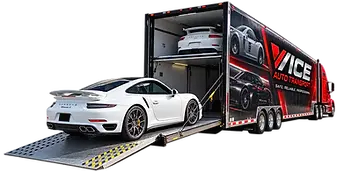
Enclosed shipping is particularly useful for:
Classic cars
Exotic vehicles
Restored vehicles
High-value luxury cars
Certain low-clearance sports cars
Specialty or collector vehicles
For example, a vintage Porsche traveling from Chicago to Newport Beach deserves a different loading and protection discussion than a standard commuter sedan.
Some enclosed carriers offer liftgate loading or specialized securement equipment, but not every enclosed trailer is configured the same way.
Ask about the equipment being arranged rather than assuming all enclosed carriers provide identical service.
Our guide on whether enclosed auto transport is worth it for your car explains the differences in greater detail.
How Much Does It Cost to Ship a Car From Chicago to Phoenix or Southern California?
Distance matters, but it isn't the only factor.
Chicago-to-Phoenix transportation generally involves roughly 1,700 to 1,900 road miles, depending on the exact locations and route.
Chicago-to-Southern California shipments can run approximately 1,900 to more than 2,100 miles.
Those are planning estimates, not fixed carrier routes.
Your actual shipping quote depends on:
Pickup and delivery ZIP codes
Vehicle size and weight
Running condition
Open or enclosed transport
Time of year
Carrier availability
Fuel expenses
Pickup flexibility
Location accessibility
A standard sedan available near a major interstate is usually easier to accommodate than a lifted, oversized SUV at a restricted residential location.
Why Seasonal Demand Can Change Your Rate
Auto transport rates reflect the available carrier market.
During peak seasonal movement, more vehicles may be competing for transportation in one direction.
A carrier may also have to consider whether enough paying loads are available for its return trip.
These factors can influence the amount a driver is willing to accept.
Fuel costs matter as well, particularly on long interstate routes. Learn more in How Rising Diesel Prices Affect Auto Transport Costs.
Don't Choose a Quote Based Only on the Lowest Price
A very low quote may look attractive, but it doesn't guarantee that a carrier will accept the shipment.
If the amount offered to the carrier isn't competitive for the route and season, the vehicle may remain unassigned.
That can result in delays or requests to adjust the price.
A realistic quote is one that reflects the vehicle, route, timing, and current market—not simply the lowest number someone is willing to advertise.
How Long Does Chicago to Phoenix or Southern California Car Shipping Take?
Once a vehicle is loaded, long-distance transportation on these routes often takes approximately four to eight days, depending on the destination, carrier schedule, weather, and number of other stops.
That's an estimate, not a guaranteed delivery window.
Pickup scheduling is separate from transit time.
A vehicle might be collected quickly when an available carrier is already passing through the area, or it may take longer to secure an appropriate truck.
Winter Weather Can Affect More Than Chicago
Snow, freezing rain, high winds, and icy roads can affect pickups around Chicagoland.
But a storm doesn't have to occur at your exact pickup address to disrupt transportation.
A carrier may encounter weather along its incoming route or need to change its schedule to avoid unsafe conditions.
Southwestern routes can also experience mountain weather, high winds, road restrictions, and seasonal traffic.
Even when Phoenix or Los Angeles is sunny, the truck may be traveling through very different conditions along the way.
Don't Schedule Delivery Around a Single Exact Hour
Auto carriers coordinate multiple pickups and deliveries.
Traffic, federally regulated driving hours, loading delays, and weather can affect the schedule.
If you have a flight, lease deadline, or another important appointment, discuss it before booking.
For a particularly tight deadline, read What Guaranteed Pickup Means for Auto Transport.
When Should Snowbirds Book Their Car Shipment?
Starting the conversation approximately one to three weeks before your preferred pickup period is often sensible.
Additional notice may help with:
Holiday travel
Enclosed transportation
Rural pickups
Specialty vehicles
Restricted dealership hours
Narrow availability windows
Booking earlier doesn't automatically lock in a carrier or guarantee a specific price.
But it gives your transport coordinator more time to understand the shipment and discuss realistic options.
Should Your Vehicle Arrive Before You?
That depends on who can receive it.
If you want the vehicle delivered before your flight, you may be able to authorize a trusted family member, friend, dealership, or storage facility to accept it.
The receiving person needs to be available for delivery and able to inspect the vehicle and complete the condition paperwork.
If nobody can receive the car before you arrive, discuss your travel schedule before dispatch.
Don't assume a carrier can store the vehicle indefinitely while waiting for your flight.
Door-to-Door Pickup in Chicago, Phoenix, and Southern California
Door-to-door auto transport generally means pickup and delivery as close to the requested addresses as safely and legally possible.
It doesn't mean every large carrier can enter every driveway or residential street.
Multi-car transport trucks need substantial space to turn, maneuver, park, and operate loading ramps.
Access challenges may include:
Narrow Chicago neighborhood streets
Congested downtown locations
Low tree branches
Tight suburban cul-de-sacs
Gated communities
Apartment and condominium complexes
Steep driveways
Truck restrictions
Crowded Southern California streets
A nearby wide road, commercial parking area with permission, or another truck-friendly meeting location may be necessary.
This is a normal part of safe vehicle transportation.
Read Are Residential Pickups Allowed for Auto Transport? for more details.
How to Prepare Your Car for Seasonal Transportation
A little preparation makes the pickup process easier.
Before the carrier arrives:
Wash the vehicle enough to inspect its exterior condition.
Take clear photographs from multiple angles.
Remove valuables and personal belongings.
Keep approximately one-quarter tank of fuel unless instructed otherwise.
Check for fluid leaks.
Secure or remove loose accessories.
Make sure the battery is charged.
Confirm the vehicle can roll, steer, and brake.
Have a working key available.
If the vehicle is modified, lowered, lifted, or inoperable, tell your transport coordinator before dispatch.
Those details can affect loading equipment and carrier selection.
Personal Belongings Inside the Vehicle
Auto transport carriers aren't substitutes for household moving services.
Some carriers may permit a limited amount of personal property inside a vehicle, while others prohibit it.
Items are generally not covered by the carrier's vehicle cargo policy, and additional weight can create problems.
The safest approach is to transport the vehicle without personal belongings.
Inspect the Vehicle at Pickup and Delivery
At pickup, review the vehicle's condition with the driver.
Existing dents, scratches, windshield chips, and other visible issues should be documented on the Bill of Lading or condition report.
Repeat the inspection at delivery before signing the final paperwork.
If you discover a new concern, document it immediately.
Vice Auto Transport coordinates shipments with independent motor carriers and verifies carrier authority and insurance information/documentation as part of dispatch.
Customers should still understand the assigned carrier's coverage and applicable exclusions.
What About the Return Trip From Arizona or California to Chicago?
Many seasonal customers ship their vehicles in both directions.
That doesn't mean the return trip should be treated as an automatic repeat of the original shipment.
The pickup and delivery locations may change.
The seasonal demand pattern may be different.
The carrier market may have shifted.
Your preferred travel dates may also be tighter.
If you're returning from Scottsdale, Phoenix, Los Angeles, Orange County, or San Diego to the Chicago area, give your transport coordinator the updated dates and exact locations.
Planning the return shipment early can help avoid scrambling for a truck during a busy spring travel period.
Why Work With Vice Auto Transport for Chicago-to-Southwest Car Shipping?
Seasonal vehicle shipping should be straightforward, but the details matter.
At Vice Auto Transport, we coordinate nationwide vehicle transportation with independent motor carriers.
We help customers understand their options rather than treating every shipment as interchangeable.
That includes discussing:
Realistic pickup windows
Open versus enclosed trailers
Seasonal carrier availability
Vehicle condition and special equipment
Residential access
Carrier coordination
Delivery arrangements
And when you have a question, you can speak with a real transport professional.
No guessing about whether the car is ready, whether a carrier has been assigned, or what the next step should be.
Our goal is to give you clear information and realistic expectations throughout the shipment.
Get a Quote for Chicago to Phoenix or Southern California Car Shipping
Whether you're escaping a Chicago winter, relocating to Arizona, purchasing a vehicle in California, or planning your seasonal return north, Vice Auto Transport can help arrange the shipment.
Send us your pickup and delivery ZIP codes, vehicle year, make, model, running condition, preferred dates, and whether you'd like open or enclosed transportation.
We'll review the route and help you understand the available options.
Call: 1-800-541-0696
Text: 754-800-4112
Vice Auto Transport — Let Us Handle the Miles.


Comments